You've just received the diagnosis — osteoporosis or osteopenia — and suddenly every movement feels like a risk. Should you exercise? What if you fall? What if you make it worse? These fears keep millions of adults over 55 from the very activity their bones desperately need.
The safest and most effective osteoporosis exercises are supervised weight-bearing and resistance training movements that stress bones just enough to stimulate new bone formation without risking fractures. When performed correctly under the guidance of a qualified personal trainer, these exercises can slow bone loss, improve balance, and reduce fall risk by up to 40%. At EveryBitFit in Scottsdale, our trainers specialize in bone-density programs that make strength training safe, effective, and — yes — even enjoyable for adults managing osteoporosis.
This guide covers the science behind bone-strengthening exercise, the specific movements that work, common exercises to avoid, and how personalized training transforms fear into confidence.
Why Exercise Matters More Than You Think for Bone Health
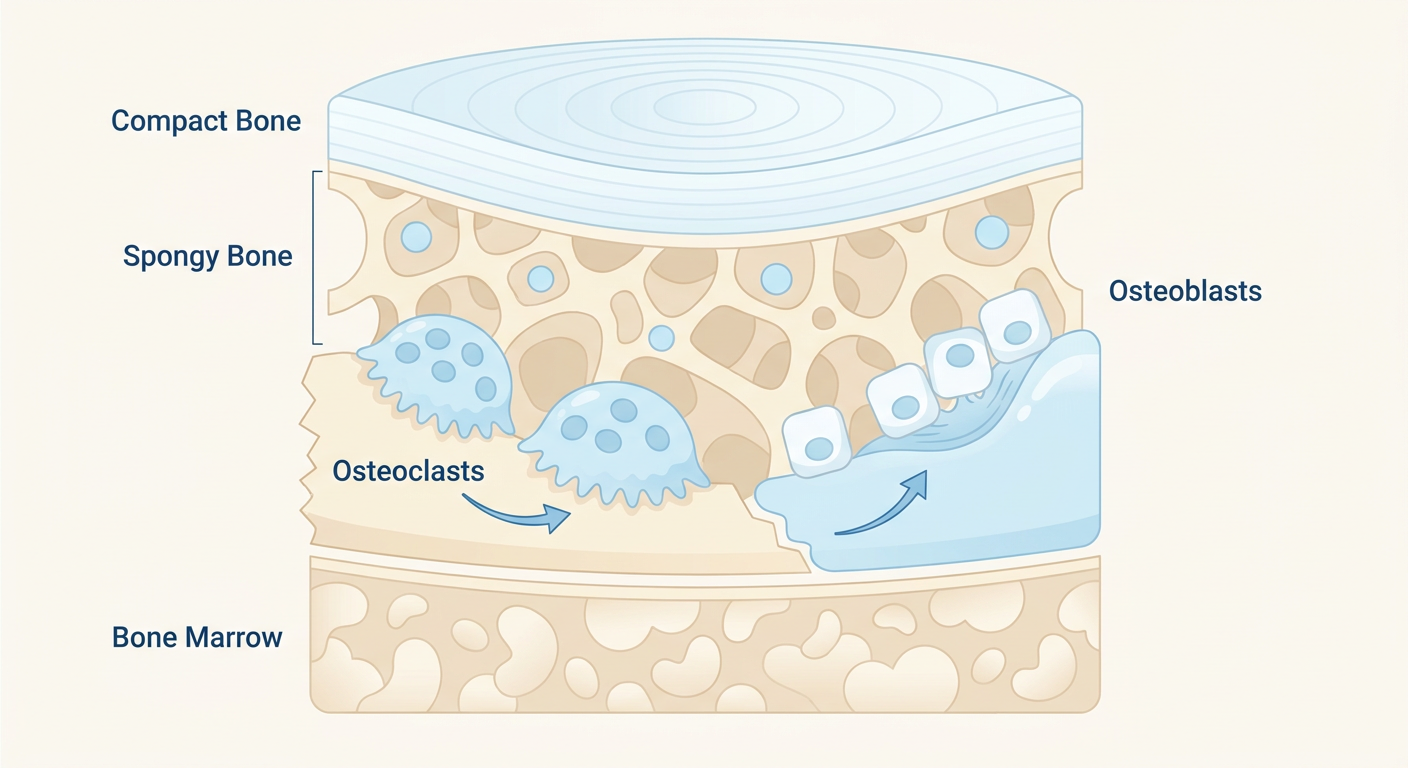
Your bones aren't static structures — they're living tissue that constantly breaks down and rebuilds. After age 30, this balance tips toward breakdown. By menopause, women can lose up to 20% of their bone density within five to seven years. Men face similar losses, just a decade later.
Here's what most people don't realize: mechanical stress from exercise is one of the only proven ways to signal your bones to rebuild stronger. According to the National Institutes of Health, weight-bearing and resistance exercises stimulate bone-forming cells (osteoblasts) to increase bone mineral density. Walking alone isn't enough. Swimming and cycling, while excellent for cardiovascular health, don't provide the mechanical loading bones need.
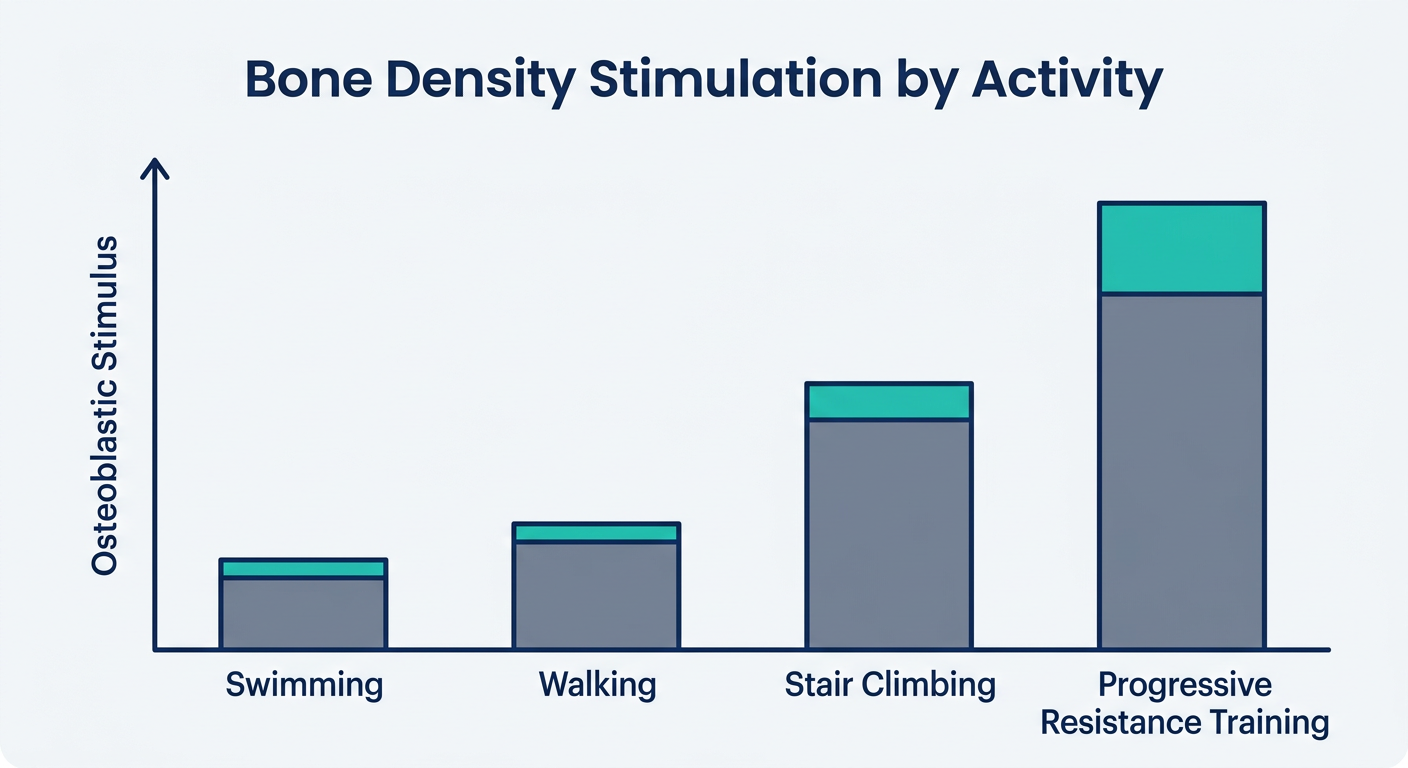
The research is clear: a meta-analysis published in the Journal of Bone and Mineral Research found that progressive resistance training increased lumbar spine bone density by 1-3% in postmenopausal women over 12 months — enough to shift someone from the fracture-risk category to stable.
But here's the critical caveat that keeps our Scottsdale trainers up at night: the wrong exercises can cause the very fractures you're trying to prevent. High-impact jumping, deep forward bending, and twisting movements under load put fragile spines at serious risk. This is why generic gym routines and YouTube workout videos are dangerous for anyone with compromised bone density.
The difference between beneficial stress and harmful stress is precise — and it's exactly why working with a trainer who understands osteoporosis isn't optional. It's essential.
How EveryBitFit Designs Safe Bone-Strengthening Programs
At EveryBitFit's private Scottsdale studio near Scottsdale Airpark, we don't hand you a generic workout sheet and send you to the weight floor. Every client with osteoporosis or osteopenia receives a customized program built around three principles: appropriate loading, proper alignment, and progressive challenge.
Your first session includes a thorough movement assessment. We evaluate your posture, balance, current strength levels, and any areas of concern your physician has flagged. We want to know about your DEXA scan results, your history of fractures, and what movements feel unstable or uncomfortable. This isn't a box-checking exercise — it shapes every decision we make about your program.
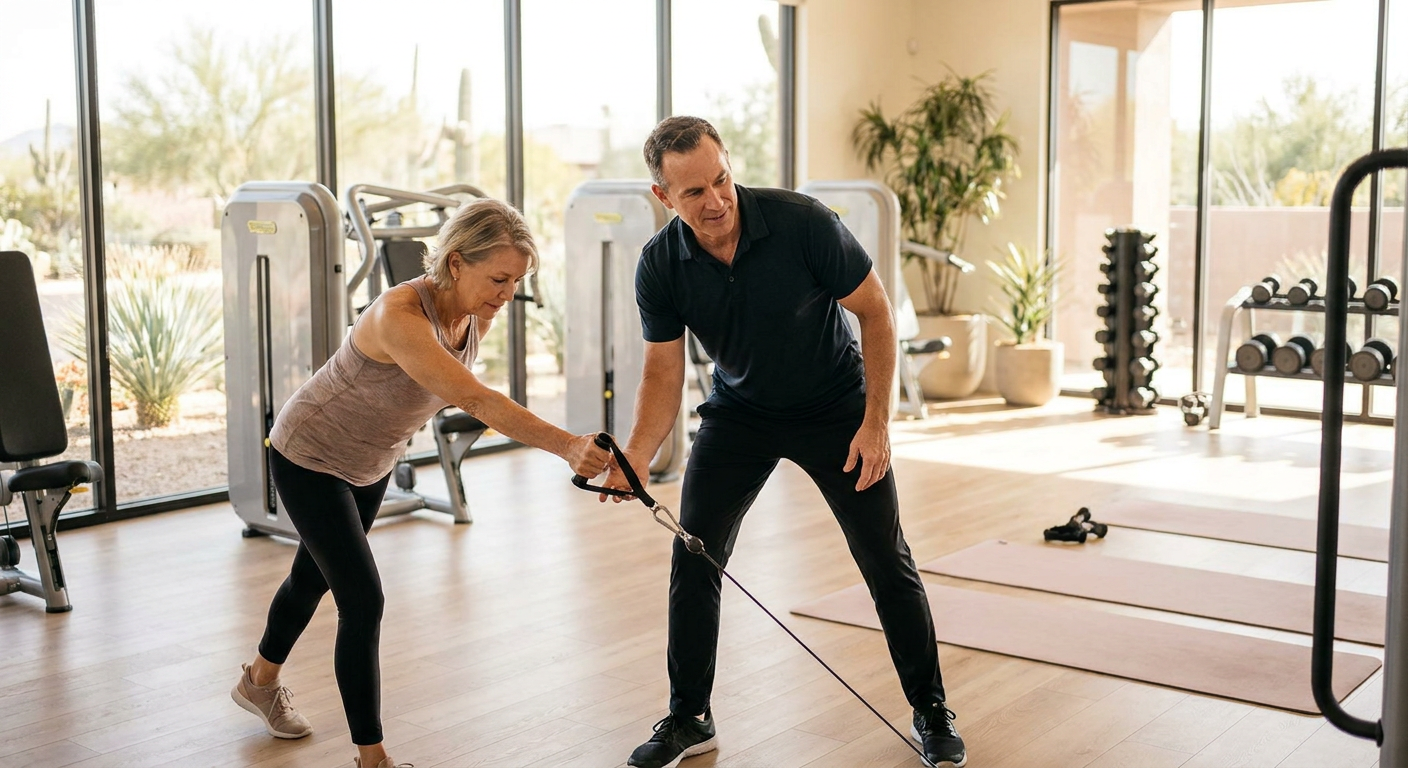
Our active adults and seniors program emphasizes exercises that target the bones most vulnerable to osteoporotic fractures: the spine, hips, and wrists. You'll learn to perform standing dumbbell presses that load the spine safely, hip hinge patterns that strengthen the femoral neck, and grip exercises that stress the wrist bones — all with technique corrections happening in real time.
Because EveryBitFit is a private studio — not a crowded big-box gym — you'll never feel rushed or self-conscious. There's no 20-year-old doing box jumps next to you. No intimidating machines you don't understand. Just you, your trainer, and equipment selected specifically for your session.
Nutritional coaching is included with every program because bone health isn't just about exercise. We'll discuss calcium timing, vitamin D optimization, protein intake for muscle preservation, and how your nutrition supports or undermines your bone-building efforts.
Ready to train your bones safely? Book a Free Fitness Strategy Session + Workout to experience what personalized osteoporosis training feels like. No commitment, no pressure — just answers. Or call us at (602) 743-6867.
The Best Osteoporosis Exercises to Strengthen Bones
These evidence-based exercises form the foundation of effective bone-strengthening programs. However, proper form is non-negotiable — what looks simple on paper can cause injury when performed incorrectly. Our Scottsdale trainers teach each of these with hands-on coaching and real-time feedback.
Weight-Bearing Exercises
Walking with purpose: Not a leisurely stroll. We're talking brisk walking on varied terrain — slight inclines, outdoor surfaces — that forces your skeleton to adapt. Aim for 30 minutes most days, but start where you are.
Stair climbing: Each step loads the hip and spine more than flat walking. Use a handrail for balance, focus on driving through the heel, and start with just one flight if that's your current capacity.
Low-impact stepping: Using a stable 4-6 inch platform, step up and down in controlled patterns. This provides the bone-loading benefits of impact without the joint stress of jumping.
Resistance Training Exercises
Goblet squats to box: Holding a dumbbell at chest height, you sit back to a stable surface (chair, bench, box) and stand. This loads the spine and hips while the box provides a safety net and depth control. Our trainers often start clients here before progressing to free squats.
Standing dumbbell shoulder press: Pressing weight overhead while standing creates compressive force through the entire spine — exactly the stress that stimulates bone formation. Alignment matters enormously here; our trainers cue rib position and core bracing to protect the lower back.
Hip hinge with kettlebell: The deadlift pattern — bending at the hips while keeping the spine neutral — strengthens the posterior chain and loads the hip bones. We teach this meticulously because the difference between a safe hip hinge and a dangerous rounded-back lift is subtle.
Farmer's carry: Simply holding heavy dumbbells and walking. This loads the wrists, shoulders, hips, and spine simultaneously while challenging balance. It's functional, safe, and surprisingly challenging.
Seated row: Pulling movements strengthen the upper back muscles that support posture, reducing the forward-rounding (kyphosis) that increases spinal fracture risk. Cable machines or resistance bands work equally well.
Balance and Stability Exercises
Single-leg stance: Stand on one foot near a wall or chair for support. Hold for 30 seconds each side. Progress by closing your eyes or standing on a foam pad. Falls cause 90% of hip fractures — better balance prevents falls.
Heel-to-toe walking: Walk in a straight line placing the heel of one foot directly in front of the toes of the other. This challenges the vestibular system and builds the reactive balance that prevents stumbles.
Tai Chi movements: The slow, controlled weight shifts in Tai Chi have been shown in multiple studies to reduce fall risk in older adults. We incorporate similar movement patterns into balance training.
Exercises to Avoid with Osteoporosis
This is where generic fitness advice becomes dangerous. Movements that are perfectly safe for someone with healthy bones can cause compression fractures in osteoporotic spines. Avoid these until cleared by your physician and trainer:
- Forward flexion under load: Crunches, sit-ups, toe touches while holding weight, and exercises that round the spine forward while bearing load compress the vertebrae — the exact mechanism of compression fractures.
- High-impact jumping: Box jumps, jump squats, and plyometric movements create forces that fragile bones may not tolerate.
- Twisting movements under load: Russian twists with a medicine ball, rotational cable exercises, and golf swings with resistance create shear forces on the spine.
- Deep forward bending: Yoga poses like deep forward folds, especially combined with rounding the back, stress the anterior vertebrae.
Notice we said "avoid until cleared" — not "never do." Some clients with mild osteopenia eventually progress to modified versions of these movements. But that decision requires assessment, not guesswork. Our trainers know when to challenge and when to protect.
What Type of Exercise Is Best for Osteoporosis?
Progressive resistance training combined with weight-bearing cardiovascular exercise provides the most comprehensive bone-strengthening stimulus. The American College of Sports Medicine recommends resistance training 2-3 times per week targeting major muscle groups, plus weight-bearing aerobic activity most days. Balance training should be included at least twice weekly to reduce fall risk.
The key word is "progressive." Bones adapt to stress, which means the same 5-pound dumbbell that challenged you in month one won't stimulate new bone formation in month six. Your program must systematically increase load — and that progression requires expertise to execute safely. This is exactly what our Scottsdale trainers build into every client's plan.
Can You Reverse Osteoporosis with Exercise?
Exercise can slow bone loss, maintain current bone density, and in some cases modestly increase bone mineral density — but it cannot fully reverse established osteoporosis. Think of it as one critical tool in a comprehensive strategy that includes nutrition, medication (if prescribed), fall prevention, and lifestyle modifications.
What exercise absolutely can do: reduce fracture risk by strengthening muscles, improving balance, and building the physical resilience that keeps you upright when you trip. Our clients regularly report feeling more stable and confident within weeks of starting their programs — improvements that matter far more than a DEXA score.
How Often Should Someone with Osteoporosis Exercise?
Most adults with osteoporosis benefit from resistance training 2-3 times per week with at least 48 hours between sessions, plus daily weight-bearing movement and balance work. Rest days matter — they're when bones actually remodel in response to the stress you've applied.
At EveryBitFit, many of our Scottsdale bone-health clients train with us twice weekly and perform guided homework (walking, balance exercises, light mobility work) on other days. We provide those homework programs and check in on compliance. The combination of supervised training and independent practice creates results without requiring you to live at the gym.
Start Strengthening Your Bones With Expert Guidance
Osteoporosis doesn't have to mean fragility. The right exercises, performed correctly and progressed appropriately, can transform your bone health and your confidence. But "the right exercises" isn't something Google can prescribe — it requires a trained eye, real-time feedback, and a program built for your specific bones, your specific body, and your specific goals.
EveryBitFit has been helping Scottsdale adults train safely since 2013. Our private studio eliminates intimidation. Our customized programs eliminate guesswork. Our no-contract policy and 30-day money-back guarantee eliminate risk.
Your next step: Book a Free Fitness Strategy Session + Workout to discuss your bone health goals with a trainer who understands osteoporosis. Or call (602) 743-6867 — we'll answer your questions and schedule a time that works for you.