
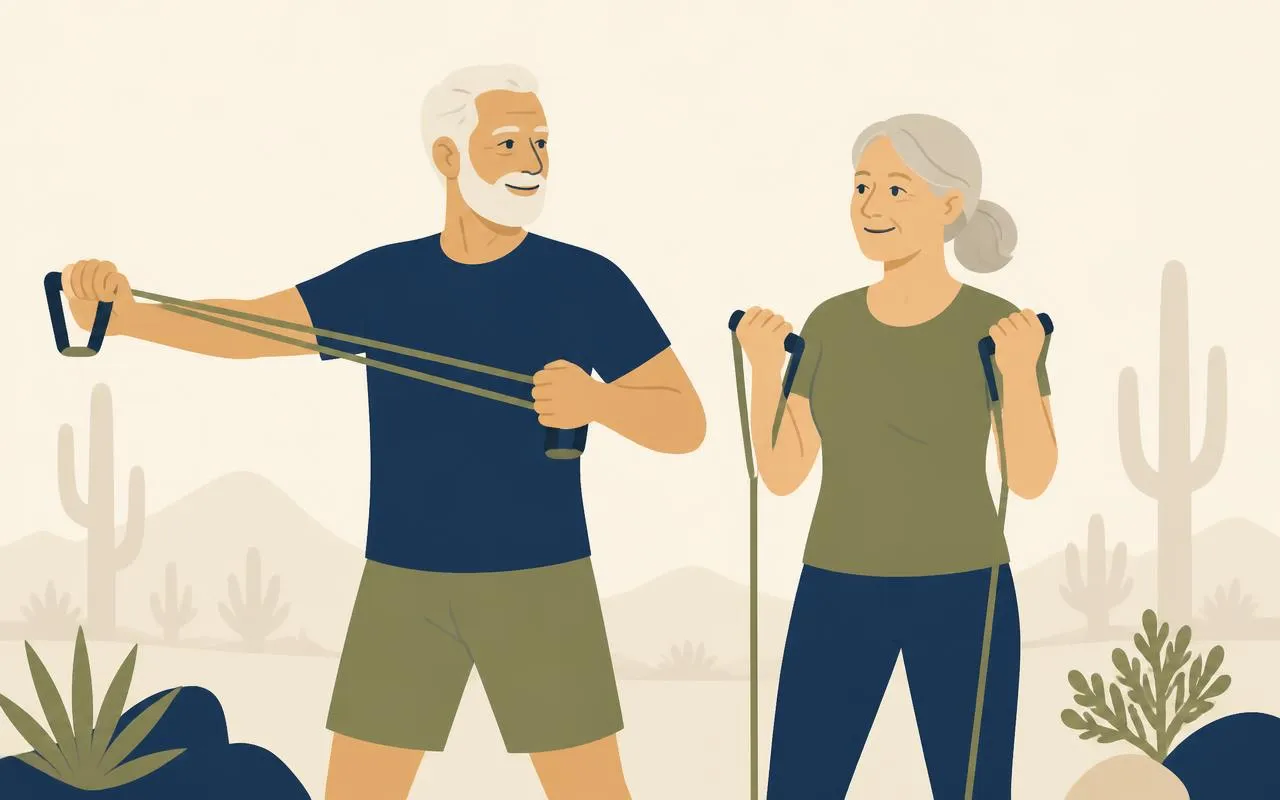
You've heard the advice a thousand times: "Stay active as you age." But what does that actually mean when your joints ache, your balance feels off, and the gym seems designed for twenty-somethings? Here's the truth Scottsdale seniors need to hear.
Resistance training helps older adults build bone density, preserve muscle mass, improve balance, and reduce fall risk. Research shows adults over 60 who strength train twice weekly experience significant improvements in functional independence, metabolic health, and quality of life—making it one of the most effective interventions for healthy aging.
At Everybitfit, our Scottsdale trainers work with adults 55+ every day, designing strength programs that account for osteoporosis, joint limitations, and the realities of aging bodies. This article explains why resistance training isn't just safe for older adults—it's essential—and how to start building strength that lasts.
The Science Behind Resistance Training for Aging Bodies
Starting around age 30, adults lose approximately 3–8% of muscle mass per decade. After 60, that rate accelerates. This progressive muscle loss—called sarcopenia—isn't just about looking weaker. It's directly linked to falls, fractures, loss of independence, and earlier mortality.
The American College of Sports Medicine recommends resistance training at least twice weekly for adults over 65, calling it "the most effective intervention to prevent and reverse muscle loss." But the benefits extend far beyond muscle.
Bone density improvement: Weight-bearing and resistance exercises stimulate osteoblast activity—the cells responsible for building new bone tissue. For post-menopausal women and anyone managing osteopenia or osteoporosis, this matters enormously. Studies show resistance training can slow bone density loss and, in some cases, actually increase bone mineral density.
Fall prevention: The CDC reports that one in four adults over 65 falls each year, and falls are the leading cause of injury-related death in this age group. Strength training improves the neuromuscular connections that control balance and reaction time—meaning you're less likely to fall, and more capable of catching yourself if you do.
Metabolic health: Muscle tissue is metabolically active, burning calories even at rest. Preserving muscle mass helps regulate blood sugar, supports healthy weight management, and reduces risk factors for type 2 diabetes—particularly relevant for older adults on GLP-1 medications who need to preserve lean mass while losing fat.
The myth that older adults should "take it easy" has been thoroughly debunked by exercise science. The research is clear: carefully programmed resistance training is one of the safest, most beneficial things a person over 55 can do.
How Everybitfit Approaches Strength Training for Older Adults
Understanding the science is one thing. Applying it safely to a 67-year-old with two knee replacements and a history of back pain is another. That's where Everybitfit's personalized approach makes the difference.
Our Scottsdale studio—near Scottsdale Airpark—is a private training facility, not a big-box gym. There are no crowded weight floors, no intimidating environments, no one-size-fits-all programs. When you train with us, your program is built around your body: your joint limitations, your medical history, your goals, and your current fitness level.
Personalized programming ensures every movement is safe for your joints and effective for your goals.
For older adults, that means:
Personalized coaching at Everybitfit ensures proper form and joint safety for every movement.
- Movement screening and assessment: Before touching a weight, your trainer evaluates how you move—identifying limitations, imbalances, and areas that need attention.
- Progressive loading: We start where you are, not where a generic program assumes you should be. Weights increase gradually as your body adapts and strengthens.
- Exercise selection for joint health: Not every exercise works for every body. Our trainers modify movements to protect vulnerable joints while still challenging your muscles.
- Balance and functional integration: Strength without stability is incomplete. Every program includes balance work and functional movements that translate to real-life activities—getting up from a chair, carrying groceries, climbing stairs.
Our Active Adults & Seniors program also integrates nutritional coaching, because protein intake and nutrient timing matter enormously for muscle preservation after 55. You're not just getting exercise—you're getting a complete system for aging stronger.
Male and female trainers are available, matched to your preferences and goals. And because we've served Scottsdale since 2013, we've worked with hundreds of older adults navigating the same challenges you face.
Ready to experience the difference personalized training can make? Book your Free Fitness Strategy Session + Workout today. In this no-pressure consultation, we'll discuss your goals, assess your movement, and build a personalized roadmap together. You'll get expert recommendations and complete a tailored workout to see our approach firsthand. Call (602) 743-6867 to get started!
Practical Tips You Can Start Today
You don't need to wait for your first training session to begin building strength. These five strategies will get you moving in the right direction—and they're exactly the kind of foundational work our trainers build upon with every client.
1. Start with bodyweight movements twice weekly. Sit-to-stands from a sturdy chair, wall push-ups, and standing heel raises build foundational strength without equipment. Aim for 2 sets of 8–12 repetitions. If you can do 12 easily, progress to a harder variation.
2. Prioritize protein at every meal. Adults over 55 need more protein to maintain muscle mass—research suggests 1.0 to 1.2 grams per kilogram of body weight daily. That's roughly 70–85 grams for a 160-pound adult. Include a protein source (eggs, chicken, fish, Greek yogurt, legumes) at breakfast, lunch, and dinner. Check our Diets & Recipes page for senior-friendly meal ideas.
3. Add single-leg balance work daily. Stand on one foot while brushing your teeth or waiting for coffee. Hold a countertop for support if needed. This simple practice improves the proprioception that prevents falls—and it's exactly the kind of progressive balance challenge our trainers incorporate into every older adult's program.
4. Don't skip rest days—but don't skip training days either. Muscle grows during recovery, so 48 hours between strength sessions is ideal. But consistency matters more than intensity. Two 30-minute sessions weekly beats one sporadic 90-minute workout.
5. Track your progress. Write down what you did: exercises, sets, reps, how it felt. Progress in resistance training means gradually doing a little more over time—an extra rep, a slightly heavier weight, a deeper squat. Without tracking, you're guessing.
Is It Safe for Seniors to Lift Weights?
Yes—when programmed appropriately, resistance training is one of the safest forms of exercise for older adults. The ACSM specifically recommends strength training for adults over 65, noting that the risks of not training (muscle loss, bone fragility, falls) far outweigh the risks of supervised exercise. The key is starting with professional guidance, proper form instruction, and weights matched to your current ability. At Everybitfit, every senior program begins with a movement assessment to ensure safe progression.
How Often Should Older Adults Do Resistance Training?
The CDC and ACSM recommend resistance training at least two days per week, targeting all major muscle groups. Sessions don't need to be long—30 to 45 minutes is sufficient when exercises are chosen strategically. Allow 48 hours between sessions working the same muscle groups to permit recovery. Our Scottsdale trainers design twice-weekly programs that fit busy schedules while delivering measurable results.
Can Strength Training Reverse Muscle Loss in Elderly?
Research confirms that older adults can rebuild lost muscle through consistent resistance training—even into their 80s and 90s. A landmark study in the Journal of Gerontology showed nursing home residents averaging age 90 increased muscle strength by 174% after eight weeks of training. The muscle-building process (hypertrophy) remains active throughout life; it simply requires the right stimulus. At Everybitfit, we've helped Scottsdale seniors regain strength they thought was gone forever.
Conclusion
Resistance training isn't a young person's game—it's one of the most powerful tools older adults have for maintaining independence, preventing falls, protecting bones, and living fully. The science is settled. The question is whether you'll act on it.
If you're in Scottsdale and ready to start building strength that lasts, Everybitfit is here. Call (602) 743-6867 or book your Free Fitness Strategy Session + Workout. It’s your no-pressure opportunity to see our studio, meet our trainers, and get a clear, personalized roadmap for success. Come see what training designed just for you feels like.
Frequently Asked Questions
Is personal training worth it for seniors who've never lifted weights?
Absolutely. Beginners benefit most from professional guidance because proper form prevents injury and accelerates results. At Everybitfit, our trainers specialize in teaching older adults who've never touched a weight—starting with bodyweight movements and progressing safely. The Fitness Strategy Session + Workout is designed exactly for this.How does Everybitfit's senior program differ from regular gyms?
Unlike crowded big-box gyms with cookie-cutter programs, Everybitfit offers private one-on-one training in a non-intimidating Scottsdale studio. Every program is customized for your joints, medical history, and goals. We include nutritional coaching and specialize in osteoporosis, balance, fall prevention, and GLP-1 muscle preservation.What if I have osteoporosis or joint replacements?
Our trainers work with these conditions daily. We modify exercises to protect vulnerable areas while still building strength where you need it most. Resistance training actually helps improve bone density when programmed correctly—it's one of the most recommended interventions for osteoporosis management.Do I have to sign a long-term contract?
Never. Everybitfit has no contracts—ever. We also offer a 30-day money-back guarantee on all programs. We earn your continued business by delivering results, not by locking you in. Start with the Fitness Strategy Session + Workout and experience the difference risk-free.I haven't exercised in years—can I really start strength training at my age?
Yes. Research shows adults can build muscle and strength at any age, even into their 90s. The key is starting appropriately and progressing gradually. Our Scottsdale trainers specialize in helping people who've been inactive reclaim their strength safely. Your first workout and consultation are free—call (602) 743-6867.This article is for informational purposes only and does not constitute medical advice. Consult your physician before beginning any new exercise or nutrition program, especially if you have existing health conditions. Results vary by individual based on effort, consistency, and adherence to programming. For personalized guidance, contact Everybitfit at (602) 743-6867 or visit everybitfit.com.