
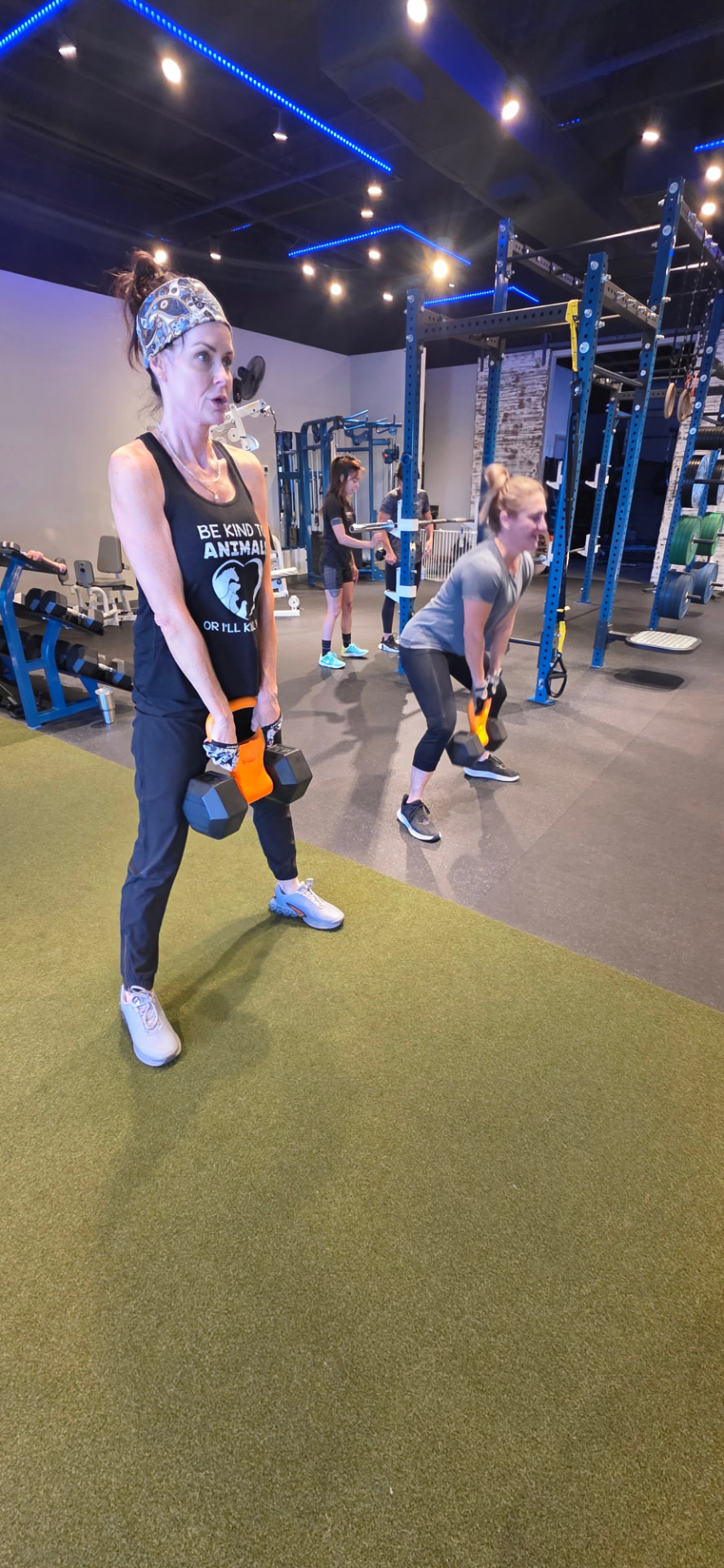
You've started Ozempic, Wegovy, Mounjaro, or Zepbound and the scale is finally moving — but your energy feels off, your arms look thinner, and you're wondering if you're losing the wrong kind of weight. You're not imagining it. Without the right exercise program, up to 40% of the weight lost on GLP-1 medications can come from muscle rather than fat, according to research published in The New England Journal of Medicine.
Here's what a Scottsdale personal trainer wants you to know: a properly designed GLP-1 workout plan prioritizes resistance training 2–3 times weekly, adequate protein intake, and progressive overload to signal your body to preserve lean muscle mass while shedding fat. This approach protects your metabolism, maintains functional strength, and ensures the weight you lose stays off.
At EveryBitFit in Scottsdale, we work with adults on GLP-1 medications who want to maximize their investment in these powerful drugs while keeping the muscle that powers daily life. This guide covers the science behind muscle loss on GLP-1s, the workout structure that prevents it, and practical tips you can start using today.
Why GLP-1 Medications Create a Muscle-Loss Risk
GLP-1 receptor agonists work by reducing appetite and slowing gastric emptying, which naturally leads to lower caloric intake. That calorie deficit drives weight loss — but your body doesn't distinguish between fat and muscle when it needs energy. Without the right stimulus, your muscles become expendable.
The challenge intensifies for adults over 55. Age-related muscle loss, called sarcopenia, already reduces muscle mass by approximately 3–8% per decade after age 30, according to the American College of Sports Medicine. Layer a significant calorie deficit from GLP-1 medications on top of that natural decline, and muscle loss accelerates dramatically.
Research on semaglutide (the active ingredient in Ozempic and Wegovy) shows participants lost an average of 15% of body weight over 68 weeks — but dual-energy X-ray absorptiometry scans revealed that lean mass accounted for roughly 39% of that loss. For a 200-pound person losing 30 pounds, that's nearly 12 pounds of muscle vanishing alongside the fat.
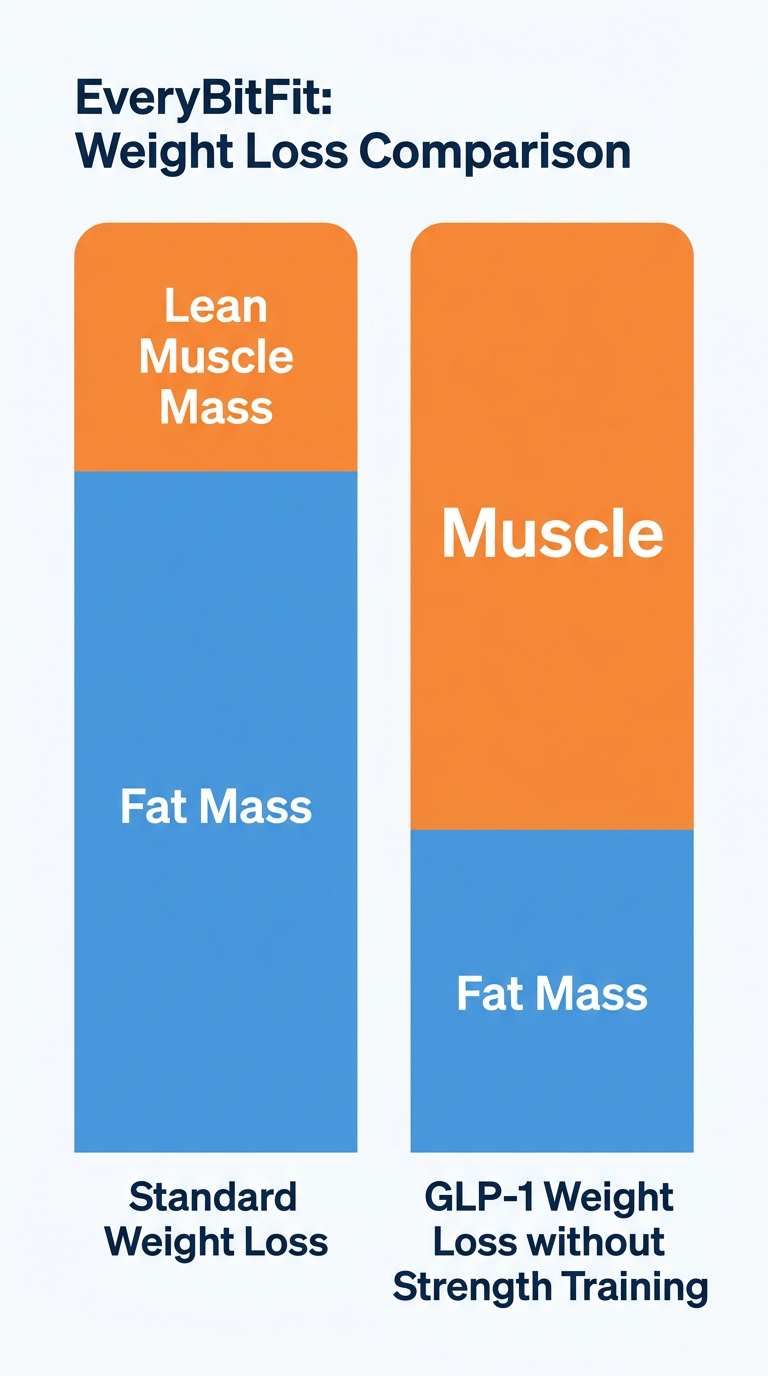
Without resistance training, a significant portion of GLP-1 weight loss comes from muscle rather than fat.
This matters beyond aesthetics. Muscle drives your resting metabolic rate — the calories you burn just existing. Lose muscle, and your metabolism slows, making weight regain more likely when you eventually stop the medication. Muscle also protects joints, supports bone density, and prevents falls. For seniors managing healthy aging, preserving that muscle isn't optional — it's essential.
How EveryBitFit Designs GLP-1 Workout Plans
At EveryBitFit, we don't hand you a generic workout sheet and wish you luck. Our trainers build individualized programs that account for your current fitness level, GLP-1 side effects, energy fluctuations, and the specific demands your body faces while in a calorie deficit.
The foundation of every GLP-1 workout plan is progressive resistance training. This means lifting weights or using bodyweight exercises with enough intensity to challenge your muscles, then gradually increasing that challenge over time. Your muscles need a reason to stick around — progressive overload provides that reason.

Professional guidance ensures you use the correct intensity to signal muscle preservation.
We structure sessions around compound movements that work multiple muscle groups simultaneously: squats, deadlifts, rows, presses, and lunges. These exercises deliver more stimulus per minute than isolation exercises, which matters when GLP-1 side effects like nausea or fatigue limit your training window.
Our trainers also integrate senior-appropriate modifications for clients who need them. That might mean using machines instead of free weights for stability, reducing range of motion during a flare-up of joint discomfort, or scheduling sessions around medication timing to work with your body's energy patterns rather than against them.
Nutritional coaching comes standard with every program. We help you hit protein targets — typically 0.7–1 gram per pound of body weight daily — which research consistently shows is critical for muscle preservation during weight loss. When appetite is suppressed, hitting those numbers requires strategy, and our team provides it.
Ready to protect your muscle while losing weight? Claim your Free Fitness Strategy Session + Workout and let our Scottsdale trainers build a GLP-1 workout plan tailored to your body and goals. Call (602) 743-6867 to get started.
A Weekly GLP-1 Workout Structure You Can Follow
This framework gives you a starting point. Adjust based on your fitness level, and work with a qualified trainer to ensure proper form and appropriate progression.
Day 1 — Lower Body Strength
Goblet squats: 3 sets of 10–12 reps
Romanian deadlifts: 3 sets of 10 reps
Walking lunges: 2 sets of 12 steps each leg
Leg press (if available): 3 sets of 12 reps
Standing calf raises: 2 sets of 15 reps
Day 2 — Upper Body Strength
Dumbbell bench press or push-ups: 3 sets of 10–12 reps
Seated cable rows or bent-over dumbbell rows: 3 sets of 12 reps
Overhead dumbbell press: 3 sets of 10 reps
Lat pulldowns: 3 sets of 12 reps
Bicep curls and tricep extensions: 2 sets of 12 reps each
Day 3 — Active Recovery
20–30 minutes of walking, swimming, or cycling at conversational pace
10 minutes of mobility work focusing on hips, shoulders, and thoracic spine
Day 4 — Full Body Strength
Trap bar deadlifts or kettlebell deadlifts: 3 sets of 8 reps
Dumbbell step-ups: 3 sets of 10 each leg
Push-ups or incline dumbbell press: 3 sets of 10 reps
Single-arm dumbbell rows: 3 sets of 10 each arm
Plank holds: 3 sets of 30–45 seconds
Days 5–7 — Rest and Low-Intensity Movement
Light walking, stretching, or yoga
Focus on sleep quality and protein intake
The key: prioritize the resistance training days. If energy is low and you can only manage three sessions per week, make them the strength days. Cardio alone won't preserve muscle — and excessive cardio can accelerate muscle loss when you're already in a deficit.
Practical Tips to Preserve Muscle on GLP-1 Medications
1. Front-load your protein. GLP-1 medications often suppress appetite more as the day progresses. Eat your largest, most protein-rich meal at breakfast or lunch when you're more likely to finish it. Aim for 30–40 grams of protein per meal across three meals daily.

Focusing on protein-dense foods helps reach daily targets even when appetite is low.
2. Time workouts around your medication. Many GLP-1 users feel best 3–4 days after their weekly injection, when nausea and fatigue subside but appetite suppression remains. Schedule your hardest training sessions during that window.
3. Track your lifts, not just your weight. The scale measures total body weight — it doesn't distinguish between fat, muscle, water, and food in your digestive system. A better indicator of muscle preservation is whether your strength stays stable or improves. If your squat weight increases while your body weight decreases, you're doing it right.
4. Don't fear the weights. Some clients worry that lifting will make them bulky. It won't. Building significant muscle mass requires a calorie surplus and specific hypertrophy programming. During a GLP-1-induced deficit, resistance training preserves existing muscle — it doesn't add bulk.
5. Work with a trainer who understands GLP-1 medications. This is exactly the kind of personalized programming our team provides at EveryBitFit's strength training sessions. We adjust your plan week by week based on how your body responds, ensuring you're always working with your biology rather than against it.
How Often Should I Exercise on Ozempic or Wegovy?
Aim for 2–3 resistance training sessions per week with at least 48 hours between sessions targeting the same muscle groups. This frequency provides enough stimulus to maintain muscle while allowing adequate recovery — which is especially important when your body is already under metabolic stress from a calorie deficit.
Add 2–3 sessions of low-to-moderate intensity cardiovascular exercise if you enjoy it and have the energy. Walking, swimming, and cycling support heart health without the muscle-depleting effects of excessive high-intensity cardio. Our EveryBitFit trainers help clients find the right balance based on their specific medication response and fitness history.
Will I Lose Muscle If I Only Do Cardio on GLP-1 Medications?
Yes, if cardio is your only form of exercise, muscle loss is likely — and potentially significant. Cardio doesn't provide the mechanical stimulus that tells your body to preserve lean tissue. In a calorie deficit without resistance training, your body catabolizes muscle for energy alongside fat.
This doesn't mean cardio is bad. It means cardio alone isn't enough. Combine it with the strength training outlined above, and you get the best of both: cardiovascular health and muscle preservation. Many clients at EveryBitFit attend our Burn Class for their cardio component while doing separate resistance sessions for muscle maintenance.
What Protein Intake Supports Muscle on Weight Loss Medications?
Research consistently supports 0.7–1.0 grams of protein per pound of body weight daily for individuals in a calorie deficit who want to preserve muscle. For a 180-pound person, that's 126–180 grams of protein spread across the day.
This is challenging when GLP-1 medications suppress your appetite. Prioritize protein-dense foods like chicken breast, Greek yogurt, cottage cheese, eggs, fish, and lean beef. Protein shakes can help when solid food feels unappealing. The nutrition resources at EveryBitFit include high-protein meal ideas designed for clients managing reduced appetite.
Conclusion
GLP-1 medications offer a powerful tool for weight loss — but without the right workout plan, you risk losing the muscle that keeps you strong, protects your joints, and powers your metabolism. A Scottsdale personal trainer who understands these medications can help you design a program that preserves lean mass while maximizing fat loss.
At EveryBitFit, we specialize in exercise programming for GLP-1 users and adults over 55 who want to age with strength and vitality. Book your Free Fitness Strategy Session or call (602) 743-6867 to start protecting your muscle today.
This article is for informational purposes only and does not constitute medical advice. Consult your physician before beginning any new exercise or nutrition program, especially if you have existing health conditions. Results vary by individual based on effort, consistency, and adherence to programming. For personalized guidance, contact EveryBitFit at (602) 743-6867 or visit everybitfit.com.