
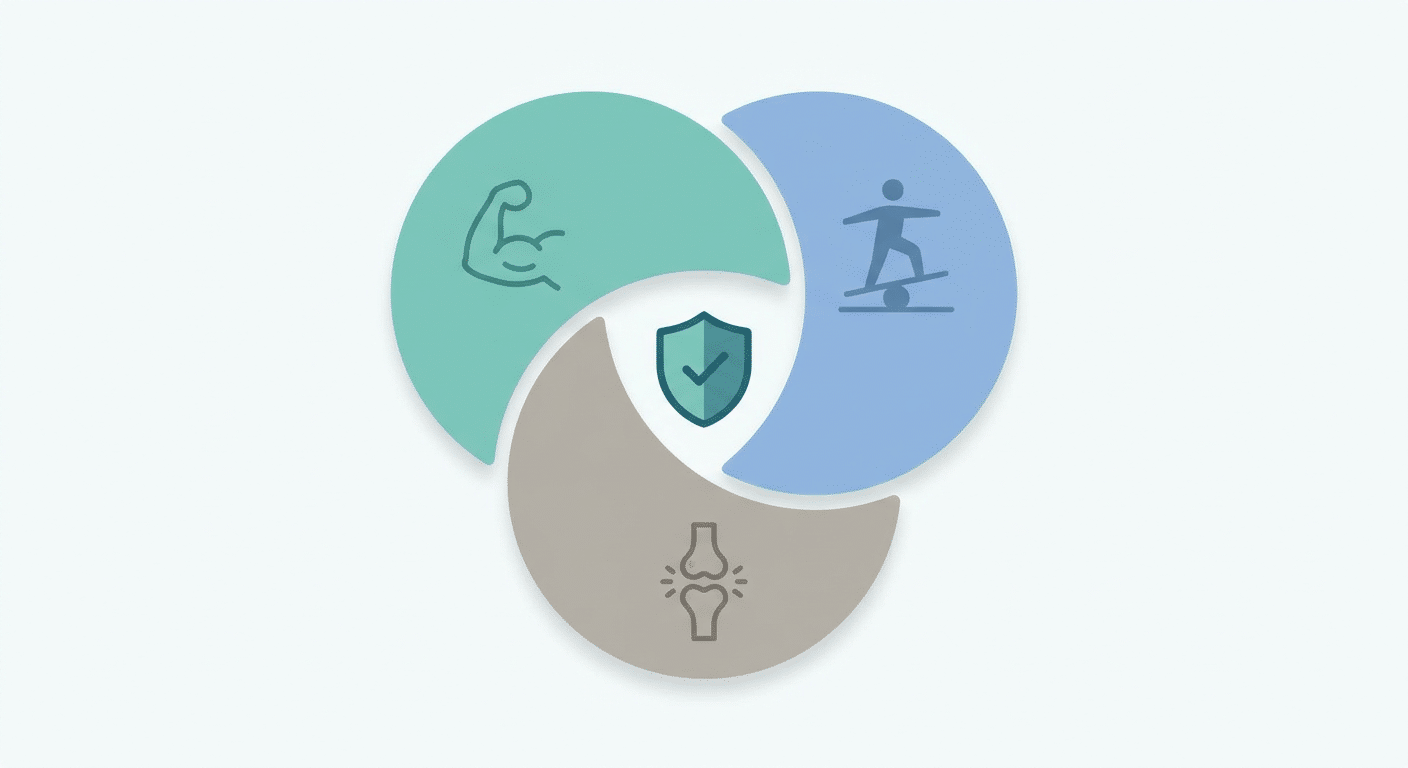
You've been told to "stay active" and "be careful" — but nobody explained exactly how to build stronger bones without risking injury. If you're a Scottsdale senior managing osteoporosis, osteopenia, or simply watching your bone density numbers decline year after year, you're not alone in feeling uncertain about what exercise is actually safe and effective.
Here's the direct answer: Strength training significantly improves bone density in seniors by stimulating bone-forming cells through mechanical stress. Research shows resistance exercise increases bone mineral density by 1-3% annually, reduces fracture risk, and slows age-related bone loss—making it essential for adults over 55 managing osteoporosis or osteopenia.
At Everybitfit in Scottsdale, our trainers specialize in safe, supervised strength programs designed specifically for aging bodies. This article explains the science behind bone-building exercise, how personalized training makes it safer and more effective, and practical steps you can start today.
The Science: Why Strength Training Builds Stronger Bones
Your bones aren't static structures—they're living tissue that constantly remodels based on the demands placed on them. This principle, known as Wolff's Law, means bone adapts to mechanical stress by becoming denser and stronger where force is applied.
When you lift weights or perform resistance exercises, muscles pull on bones at their attachment points. This mechanical loading triggers osteoblasts—the cells responsible for building new bone tissue. Without regular loading stimulus, osteoclasts (bone-resorbing cells) work faster than osteoblasts can rebuild, leading to progressive bone loss.
According to the American College of Sports Medicine, adults lose approximately 1-2% of bone mass annually after age 50. For post-menopausal women, that rate accelerates to 2-3% per year during the first decade after menopause due to declining estrogen levels.
Here's what the research shows about strength training's impact:
- A meta-analysis published in Sports Medicine found resistance training increased lumbar spine bone mineral density by 1.37% and femoral neck density by 0.92% in postmenopausal women
- The NIH identifies weight-bearing and muscle-strengthening exercises as two of the most effective non-pharmaceutical interventions for osteoporosis
- Progressive resistance training has been shown to reduce fall risk by 40% in older adults—critical because 95% of hip fractures result from falls
The key distinction: cardiovascular exercise alone isn't enough. Walking and swimming provide important health benefits, but they don't create sufficient bone-loading stimulus. Your bones need the specific mechanical stress that comes from lifting against resistance.
How Everybitfit Approaches Bone Health Training
Generic fitness programs treat every body the same—and that's dangerous when you're managing osteoporosis or osteopenia. At Everybitfit, bone health training starts with understanding exactly where you are today.
Our Scottsdale trainers design programs around your specific diagnosis, DEXA scan results, movement limitations, and health history. Someone with vertebral osteoporosis needs different exercise selection than someone with hip-specific bone loss. A client recovering from a compression fracture requires different progressions than someone focused on prevention.
What makes our approach different:
- Private studio environment — No crowds, no rushing between machines, no intimidation. You get focused attention in a space designed for safe, supervised training
- Exercise selection based on your diagnosis — We avoid forward flexion exercises that increase vertebral fracture risk for clients with spinal osteoporosis, while emphasizing hip-hinge patterns for those needing femoral neck strengthening
- Progressive loading protocols — Bones need progressive overload to adapt, but the progression must be gradual and monitored. Our trainers track your strength gains and adjust resistance systematically
- Integrated balance and fall prevention — Stronger bones matter most when you stay on your feet. Every bone health program includes balance challenges and proprioceptive training
- Nutritional coaching included — Calcium, vitamin D, and protein intake directly impact bone remodeling. Your trainer addresses the nutrition side alongside the exercise programming
Male and female trainers are available, matched to your goals and comfort level. Many of our clients are women over 50 managing post-menopausal bone loss—and they often prefer working with trainers who understand their specific concerns.
Ready to build stronger bones with a personalized plan? Schedule your Free Fitness Strategy Session + Workout. It’s a no-pressure consultation where we’ll discuss your goals, assess your movement, and build a personalized roadmap for your health. No gimmicks—just results. Call (602) 743-6867 or get started online to schedule your first session.
Practical Tips You Can Start Today
While personalized training delivers the best results for bone health, these evidence-based strategies can help you begin building stronger bones now:
1. Start with bodyweight resistance before adding external load
Squats to a chair, wall push-ups, and step-ups create meaningful bone-loading stimulus without requiring equipment. Master these movement patterns with proper form before progressing to dumbbells or machines. This is exactly the progression our trainers use with new clients—nobody starts with heavy weights on day one.
2. Focus on multi-joint exercises that load the spine and hips
Squats, deadlift variations, lunges, and standing presses load the areas most vulnerable to osteoporotic fractures. Single-joint exercises like bicep curls have their place, but compound movements deliver more bone-building stimulus per minute of training.
3. Train 2-3 times per week with at least 48 hours between sessions
Bone remodeling takes time. Training the same muscle groups daily doesn't allow adequate recovery for adaptation. The ACSM recommends resistance training all major muscle groups 2-3 days per week for older adults.
4. Include impact activities if cleared by your physician
Low-impact activities like walking stairs, hiking on uneven terrain, or light jumping (if appropriate for your bone density level) provide additional osteogenic stimulus. Always discuss impact exercise with your doctor first if you have diagnosed osteoporosis.
5. Address your protein intake
Bone is approximately 50% protein by volume. Many seniors under-consume protein, limiting their body's ability to build both muscle and bone tissue. Aim for 1.0-1.2 grams of protein per kilogram of body weight daily. Check out our Diets & Recipes page for senior-friendly meal ideas that support bone health.
What Type of Strength Training Is Best for Osteoporosis?
Progressive resistance training using moderate-to-heavy loads produces the strongest bone-building response. Exercises should target the spine, hips, and wrists—the sites most vulnerable to osteoporotic fractures. Compound movements like squats, deadlifts, rows, and presses create multi-site loading in efficient workout sessions.
The key is appropriate exercise selection based on your specific diagnosis. At Everybitfit, our trainers modify programs for clients with vertebral involvement, avoiding loaded spinal flexion while emphasizing hip-dominant patterns.
How Often Should Seniors Do Strength Training for Bone Health?
Two to three strength training sessions per week, with 48-72 hours between sessions working the same muscle groups, provides optimal bone-building stimulus while allowing adequate recovery. Each session should include 8-12 exercises covering all major muscle groups, performed for 2-3 sets of 8-12 repetitions.
Consistency matters more than intensity for long-term bone health. Our Strength Class provides structured, trainer-led sessions that keep you accountable to a regular schedule.
Can You Rebuild Bone Density After 60?
Yes, research confirms that adults over 60 can increase bone mineral density through consistent strength training—though gains may be slower than in younger populations. Studies show 1-3% annual increases in bone density are achievable with progressive resistance programs, even in adults well into their 70s and 80s.
The goal shifts from rapid building to preservation and gradual improvement. Every percentage point of bone density gained translates to meaningful fracture risk reduction. Starting strength training at any age provides benefit—it's never too late.
Conclusion
Strength training isn't optional for seniors concerned about bone health—it's essential medicine your skeleton needs to stay strong. The research is clear: progressive resistance exercise builds bone density, reduces fracture risk, and helps you maintain independence as you age.
But generic programs and crowded gyms aren't the answer when you're managing osteoporosis or osteopenia. You need personalized programming from trainers who understand aging bodies and bone health protocols.
Everybitfit has been helping Scottsdale adults train safely and effectively since 2013. Our private studio, customized programs, and integrated nutritional coaching deliver the comprehensive approach bone health requires.
Take the first step with a Free Fitness Strategy Session + Workout. During your complimentary session, we will discuss your goals, review any limitations, and complete a tailored workout to build your personalized roadmap. With no pressure and no gimmicks, it's the best way to see if our approach is right for you. Call (602) 743-6867 or book your free session online. Let's build stronger bones together.
Frequently Asked Questions
Is strength training safe if I've already been diagnosed with osteoporosis?
Yes, when properly supervised. Strength training is actually recommended by the NIH for osteoporosis management. The key is appropriate exercise selection—avoiding high-risk movements like loaded spinal flexion—and gradual progression. Everybitfit trainers specialize in designing safe programs for clients with bone density concerns.
How long before I see bone density improvements from strength training?
Bone remodeling is a slow process. Most research shows measurable bone density changes after 6-12 months of consistent training. However, you'll notice improvements in strength, balance, and confidence within the first few weeks—benefits that reduce fall and fracture risk immediately.
Do I need to lift heavy weights to build bone density?
You need progressive overload, but "heavy" is relative to your current strength level. What matters is that the load challenges your muscles and creates bone-loading stimulus. Starting with bodyweight or light resistance and progressively increasing over time produces excellent results for most seniors.
What happens during the Free Fitness Strategy Session + Workout?
Your free session is a comprehensive assessment designed to create your personalized roadmap. We'll discuss your goals, review health history and any limitations, evaluate your movement and mobility, and guide you through a sample tailored workout. Afterward, we provide expert recommendations and an overview of our training options (like Semi-Private, One-on-One, and Small Group) so you can make an informed choice. It's a no-pressure way to get started.
Can Everybitfit work with my doctor's recommendations for osteoporosis exercise?
Absolutely. We regularly coordinate with physicians, physical therapists, and other healthcare providers in Scottsdale. Bring your DEXA scan results and any exercise restrictions to your consultation—our trainers will design a program that aligns with your medical team's guidance while maximizing your results.
This article is for informational purposes only and does not constitute medical advice. Consult your physician before beginning any new exercise or nutrition program, especially if you have existing health conditions. Results vary by individual based on effort, consistency, and adherence to programming. For personalized guidance, contact Everybitfit at (602) 743-6867 or visit everybitfit.com.