
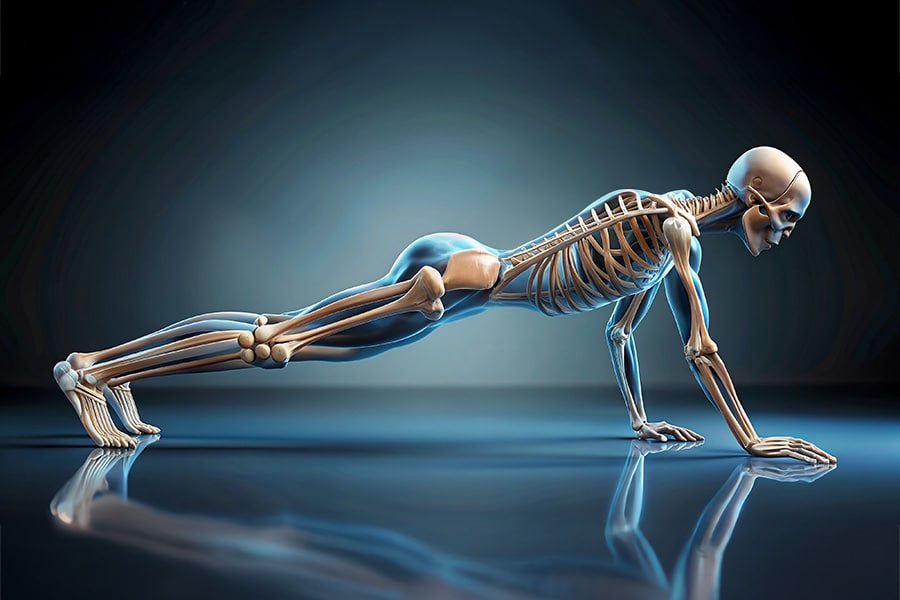
When clients come to Every Bit Fit concerned about bone health, we hear the same fears: “My doctor said I have osteopenia.” “My mom broke her hip and I don’t want that to happen to me.” “I’ve been told to lift weights but I’m afraid I’ll hurt myself.”
These concerns are valid. Osteoporosis affects over 10 million Americans, and a hip fracture can be devastating—research shows one-year mortality rates between 15% and 36% following hip fracture surgery. But here’s what our trainers have seen repeatedly: the right strength training program doesn’t just protect bones, it transforms how clients move, feel, and live.
This guide shares what our team has learned working with clients of all ages and bone health statuses. We’ll explain the exercises that matter most, how we progress clients safely, and what the training process actually looks like when bone density is a priority.
Why We Prioritize Strength Training for Bone Health

Our trainers often tell clients: your bones are living tissue. They respond to the demands you place on them. When you lift something heavy, your muscles pull on the bones they attach to, and your bones adapt by becoming denser and stronger.
This isn’t just theory we learned in certification courses. Research confirms it. The landmark LIFTMOR trial showed that women with low bone mass who performed supervised high-intensity resistance training increased their lumbar spine bone density by 2.9% in eight months. The control group, doing low-intensity home exercise, lost 1.2% during the same period.

No Risk, All gain
Schedule your free workout and consultation
What strikes us about this research is the intensity level that worked: participants lifted at greater than 85% of their one-repetition maximum. That’s heavy. And it was safe—only one minor adverse event occurred among 49 participants over the entire study.
This aligns with what we see in our gym. Clients who commit to progressive, challenging strength training don’t just maintain bone density. They build it. And they gain confidence, independence, and functional strength that carries into every part of their lives.
The Exercises Our Trainers Recommend

Not all exercises affect bones equally. Swimming and cycling are excellent for cardiovascular health, but they don’t load the skeleton enough to stimulate bone growth. Our trainers focus on movements that put meaningful stress on the areas most vulnerable to fracture: the spine, hips, and wrists.
Deadlifts: The Foundation of Our Bone Health Programs
If we could choose only one exercise for bone density, it would be the deadlift. This movement loads the entire posterior chain—your back, hips, and legs—through a full range of motion. Research shows deadlifts place significant mechanical stress on both the lumbar spine and femoral neck, the two sites where bone density matters most for preventing fractures.
We teach deadlifts to nearly every client, regardless of age. The key is appropriate progression. A 70-year-old beginner doesn’t start where a 35-year-old athlete starts. But given proper instruction and time to develop technique, most people can learn to deadlift safely and effectively.
Our trainers typically begin with hip hinge patterns using no weight at all. We might use a dowel along the spine to teach neutral alignment, or have clients practice pushing their hips back toward a wall. Only after the movement pattern is solid do we add load—and even then, we progress gradually over weeks and months.
Squats: Building the Hips and Legs
Squats complement deadlifts by loading the skeleton through a different movement pattern. Research examining the relationship between exercise and bone density found that squat strength showed a stronger correlation with hip bone mineral density than any other lift tested.
We teach squat variations based on individual mobility, strength, and goals. Some clients begin with assisted squats using a TRX or sturdy support. Others start with goblet squats holding a light dumbbell. Advanced clients progress to barbell back squats or front squats.
The common thread: we prioritize depth, control, and progressive loading. A shallow squat with heavy weight doesn’t provide the same bone stimulus as a full-depth squat with appropriate resistance.
Overhead Press and Rows: Upper Body and Spinal Loading
While the lower body exercises get most attention for bone health, our trainers include upper body pressing and pulling movements in every program. Standing overhead presses transmit force through the entire spine. Rows strengthen the muscles that support posture and protect the thoracic vertebrae.
These exercises also matter for daily function. Clients who develop pressing and pulling strength find everyday tasks easier—lifting groceries, reaching overhead, carrying grandchildren.
Impact Training: The Addition That Multiplies Results
Beyond lifting weights, our trainers incorporate impact training for clients who can tolerate it. This might include jump variations, box step-ups with a hop, or simply heel drops where clients rise onto their toes and drop their heels sharply to the floor.
The LIFTMOR trial combined resistance training with impact loading through jumping chin-ups with drop landings. The combination produced remarkable results. While not every client can or should perform high-impact movements, those who can benefit from adding this element to their training.
How We Progress Clients Safely

The question we hear most often about bone health training: “How do I know I won’t hurt myself?” Our answer: proper progression and qualified supervision.
The Assessment Process
Every client at Every Bit Fit begins with a comprehensive assessment. We evaluate movement quality, identify limitations or asymmetries, discuss health history, and establish baseline strength levels. For clients with diagnosed osteoporosis or osteopenia, we coordinate with their healthcare providers to ensure our programming aligns with medical recommendations.
This assessment isn’t a formality. It guides every decision we make about exercise selection, loading, and progression. A client with previous vertebral fractures requires different programming than a client with low bone density but no fracture history.
Starting Lighter Than You Think
New clients often want to jump into heavy training immediately. We push back on this impulse. Our approach emphasizes building movement competency before adding significant load.
A typical progression for the deadlift might look like this:
Weeks 1-3: Hip hinge pattern work with bodyweight, learning to maintain neutral spine while hinging at the hips. Light kettlebell deadlifts focusing on technique.
Weeks 4-6: Increased loading with kettlebells or dumbbells. Introduction of the barbell with light weight. Emphasis on bracing and breathing patterns.
Weeks 7-12: Progressive loading based on demonstrated technique. Working toward sets of 5-8 repetitions at challenging but manageable weights.
Months 3-6: Continued progression toward higher intensities. Introduction of variations based on individual response and goals.
This timeline varies by individual. Some clients progress faster; others need more time. The principle remains constant: earn the right to lift heavier by demonstrating competency at lighter loads.
The Role of Supervision
Research on bone density and exercise consistently shows better outcomes with supervised training. The LIFTMOR researchers explicitly noted that they do not recommend individuals with low bone mass undertake their protocol in an unsupervised environment, even after notable training, because it’s not possible to self-monitor technique.
This is why working with a qualified trainer matters. We watch every rep, cue technique adjustments in real time, and make load decisions based on what we observe. A trainer can recognize when fatigue compromises form and when it’s appropriate to push harder.
What Clients Can Expect From Training
We believe in setting realistic expectations. Here’s what our trainers want clients to understand about bone health training.
Timeline for Results
Bones adapt slowly compared to muscles. Research shows measurable bone density changes typically require six to twelve months of consistent training. The EFOPS study from Germany demonstrated that participants who trained for two years saw lumbar spine density increase by 1.3% while controls decreased by 1.2%.
This means committing to training as a long-term practice, not a short-term fix. Clients who train consistently for years see the greatest benefits. Those who start and stop repeatedly may not see meaningful bone density changes.
Strength Gains Come First
While bone density changes take months to measure, strength improvements happen much faster. Most clients notice significant strength gains within the first eight to twelve weeks of training. They lift more weight, perform more repetitions, and find daily activities easier.
These strength gains matter beyond the numbers. Stronger muscles support and protect bones. Better balance reduces fall risk. Improved confidence leads to more active living.
The Training Itself
Bone health training doesn’t look dramatically different from good strength training in general. Our sessions typically include:
- Warm-up and mobility work (10 minutes)
- Primary compound lifts like deadlifts and squats (20-25 minutes)
- Accessory exercises for balanced development (15 minutes)
- Cool-down and flexibility work (5-10 minutes)
We train most clients two to three times per week, which aligns with research showing optimal bone density outcomes at this frequency. Sessions last 45-60 minutes. The intensity is challenging but appropriate—we want clients working hard, not struggling with weights they can’t control.
Who Benefits Most From This Training
While everyone can benefit from strength training, certain groups see particular advantages for bone health.
Postmenopausal Women
Estrogen plays a crucial role in maintaining bone density. After menopause, when estrogen levels drop significantly, bone loss accelerates. Research shows women can lose 1.5% to 2.5% of bone mass annually during the first ten years after menopause.
Strength training provides mechanical stimulus that helps counteract this loss. The LIFTMOR trial specifically enrolled postmenopausal women with low bone mass and demonstrated that high-intensity training was both safe and effective for this population.
Adults Over 50
Age-related bone loss affects everyone, though at different rates. Starting strength training earlier provides more years of bone-building stimulus. But research also shows that it’s never too late to start—studies have demonstrated bone density improvements in participants well into their 70s and 80s.
Those With Family History of Osteoporosis
Genetics influence bone density significantly. If your mother, father, or siblings have osteoporosis, your risk is elevated. Proactive strength training can help mitigate this genetic predisposition by building and maintaining the bone density you have.
Anyone Who Wants to Age Independently
Beyond bone density numbers, strength training builds the functional capacity that allows independent living. Clients who train with us get up from chairs without assistance, carry their own groceries, and maintain active lifestyles as they age. These outcomes matter as much as any DEXA scan result.
Getting Started With Every Bit Fit
If bone health is on your mind, the path forward is straightforward: start with an assessment. Our trainers will evaluate where you are now, discuss your goals and concerns, and design a program that meets you where you are while progressing you toward where you want to be.
We don’t believe in one-size-fits-all programming. Your training should reflect your body, your history, and your objectives. Some clients come to us with significant lifting experience and can progress quickly to challenging loads. Others have never touched a barbell and need patient, methodical instruction. Both approaches work when applied appropriately.
What matters most is starting. Every week you’re not strength training is a week your bones aren’t receiving the stimulus they need to stay strong. The research is clear: resistance training improves bone mineral density. Our job is translating that research into safe, effective, individualized training that fits your life.
Schedule your initial assessment to learn exactly what a bone health-focused training program looks like for you.
Frequently Asked Questions
I have osteoporosis. Is strength training safe for me?
Research shows supervised, properly progressed strength training is safe for people with osteoporosis. The key is qualified instruction and appropriate loading. We coordinate with healthcare providers and modify programming based on individual circumstances. Many clients with diagnosed osteoporosis train successfully with us.
How heavy do I need to lift to improve bone density?
Studies showing the best bone density outcomes used loads at 65-85% of one-repetition maximum. This is challenging weight, but it’s built up to gradually. We never start clients at these intensities—we progress them there over weeks and months as technique improves.
How often should I train for bone health?
Our trainers recommend two to three sessions per week, which aligns with research findings. Bones need recovery time between training sessions, and more isn’t necessarily better. Consistency over months and years matters more than cramming in extra sessions.
Will I see results on my DEXA scan?
Most clients who train consistently for twelve months or more see positive changes in bone density measurements. Results vary by individual. We encourage clients to focus on the strength gains, improved function, and increased confidence they experience alongside any bone density changes.
I’m nervous about lifting weights. Where do I start?
Start with an assessment. We’ll evaluate your movement, discuss your concerns, and design an appropriate entry point. Most clients begin with lighter loads and progress gradually. Building confidence comes from competent instruction and successful experiences, not from jumping into heavy weights immediately.
This article reflects the training philosophy and methods used by Every Bit Fit’s certified personal trainers. Research citations include studies from the Journal of Bone and Mineral Research, Osteoporosis International, and guidance from the International Osteoporosis Foundation and Bone Health and Osteoporosis Foundation. Individual results vary based on training consistency, health status, and other factors. Consult your healthcare provider before beginning any new exercise program, especially if you have diagnosed bone conditions.


