
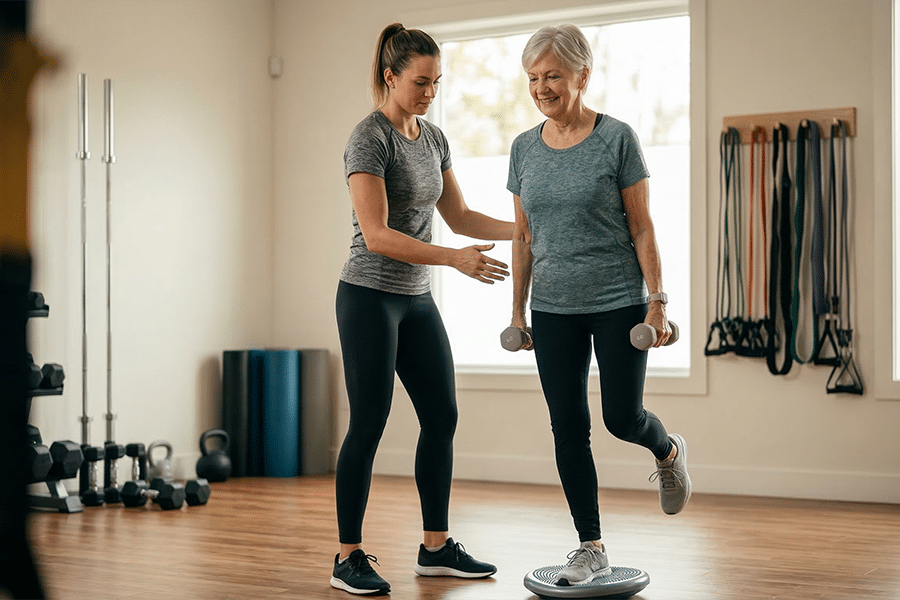
Every year, more than 14 million Americans aged 65 and older Fall Prevention, according to the CDC. In 2021, falls caused over 38,000 deaths in this age group and sent 3 million people to the emergency department. The total healthcare cost of non-fatal older adult falls reached $80 billion in 2020, per a 2024 CDC study published in the journal Injury Prevention — up from $50 billion just five years earlier. Falling once doubles your chances of falling again.
These are not statistics that should be accepted as inevitable. The research is clear: targeted strength and balance training dramatically reduces fall risk in older adults. And at EveryBitFit in Scottsdale, Arizona, certified personal trainers — including new team member Daphlie “Daph,” who specializes in balance, bone density, and longevity training for women 40+ — are helping seniors build the physical resilience that prevents falls before they happen.

Why Falls Happen — and Why They’re Not an Inevitable Part of Aging
Falls in older adults are driven by a combination of modifiable risk factors. According to the CDC’s STEADI (Stopping Elderly Accidents, Deaths, and Injuries) initiative, the most common contributors include muscle weakness, poor balance, gait problems, reduced flexibility, and medication side effects.
The underlying mechanism is well understood. As published in a review in PMC examining 155 studies from 2004–2024, aging causes progressive loss of muscle mass (sarcopenia), reduced neuromuscular coordination, impaired postural control, and declining proprioception — the body’s ability to sense where it is in space. These changes compound gradually, and most people never notice them until a fall occurs.
What the research also shows, however, is that every one of these risk factors responds to targeted exercise. A Cochrane Collaboration systematic review (Sherrington et al., 2019) analyzing data from community-dwelling adults over 60 confirmed that exercise programs targeting balance, gait, and muscle strength effectively prevent falls. A 2023 network meta-analysis published in the European Review of Aging and Physical Activity, which analyzed 66 RCTs involving over 47,000 participants, found that postural control training and combined balance-and-strength training were the most effective exercise modes for reducing fall events, with balance training producing a 34% reduction in fall risk (RR = 0.66).

No Risk, All gain
Schedule your free workout and consultation
As Johns Hopkins physical therapist Lora Stutzman has stated, exercises focusing on balance and strength training “can help improve balance and build strength to help prevent future falls.”
What the Research Says About Exercise and Fall Prevention
Balance Training: The Single Most Effective Intervention
The 2023 network meta-analysis in the European Review of Aging and Physical Activity ranked exercise interventions by their effect on fall risk. The results were definitive: balance-focused training (postural control training) produced the greatest fall risk reduction of any exercise type, achieving a relative risk of 0.66 — a 34% reduction in fall events. This outperformed resistance training alone, combined programs, and multifactorial approaches.
A 2023 systematic review published in Frontiers in Public Health confirmed these findings, concluding that physical exercises combining resistance and balance components improve “lower extremity strength, balance performance and mobility” in community-dwelling adults 65 and older, and that these improvements directly translate to reduced fall rates.
Strength Training: Building the Foundation
Muscle weakness is one of the primary predictors of fall risk. The CDC identifies it as a leading modifiable risk factor, and research consistently shows that resistance training addresses it directly.
A systematic review published in PMC (2021) analyzing RCTs of strength training for fall prevention in older adults found that supervised strength training produced comparable fall risk reduction to multicomponent exercise programs. The review noted that “high intensity ST” and programs incorporating “high velocity power” components were particularly effective, as muscle power — the ability to generate force quickly — is the critical factor in catching yourself when you stumble.
Combined Programs Deliver the Best Real-World Results
While balance training ranks highest in isolation, real-world fall prevention requires a multi-faceted approach. The Cochrane review (2019) found that exercise programs combining balance and functional exercises with resistance training produce robust, consistent fall prevention outcomes.
This is precisely the model EveryBitFit uses. Their programs don’t isolate one component — they integrate strength, balance, flexibility, and mobility into every session.
How EveryBitFit Builds Fall Prevention Into Every Senior Training Program
The Trainers Making It Happen
EveryBitFit’s team includes trainers with specific expertise relevant to fall prevention:
Daphlie “Daph” is a new addition to the EveryBitFit team and an ISSA Certified Personal Trainer who specializes in helping women 40+ “improve bone density, balance, and overall longevity through safe, progressive strength training.” Originally from Haiti, Daphlie’s coaching style “blends warmth, encouragement, and accountability,” with a focus on “proper form, steady progress, and creating an environment where clients feel supported and empowered.” Her specialization in balance and bone density makes her a natural fit for clients concerned about fall risk.
Jason works with clients of all ages, from busy professionals to active retirees, and specializes in “building strength, improving mobility, supporting healthy weight loss, and boosting energy.” For seniors and those returning to fitness, Jason’s approach creates “a welcoming environment where progress feels possible — and enjoyable.” He is described on EveryBitFit’s website as “passionate about helping people move better, feel stronger, and stay independent longer.”
Rasa is a certified Pilates instructor and Brrrn board expert who brings “a holistic approach integrating strength, flexibility, and balance.” Her programs are specifically designed to build bone density while improving flexibility and balance — which EveryBitFit’s website describes as “crucial for preventing falls.”
The EveryBitFit Fall Prevention Methodology

As documented across EveryBitFit’s website, their approach to fall prevention follows a structured, evidence-aligned methodology:
Step 1: Comprehensive Assessment. Every client begins with a 3D body scan, health history discussion, goal-setting session, and fitness evaluation. For seniors, trainers identify existing balance deficits, mobility limitations, and medical conditions. EveryBitFit trainers can coordinate with healthcare providers to ensure the fitness program complements medical treatment.
Step 2: Personalized Programming. Programs are custom-built around individual needs. For fall prevention clients, this includes targeted balance exercises, lower extremity strength training, core stability work, and gait training — the exact combination the research identifies as most effective.
Step 3: Supervised, Consistent Sessions. EveryBitFit recommends 2–3 sessions per week. Every rep is supervised one-on-one, which means real-time form correction and progressive challenge — the supervision model that research consistently shows produces better outcomes than unsupervised exercise.
Step 4: Tracking and Adapting. Regular reassessments ensure the program evolves as the client improves. Balance and strength are measured and progressed systematically.
EveryBitFit also cites on their senior fitness page that “seniors who engage in regular supervised exercise experience up to a 50% reduction in fall risk through improved balance and coordination” — a figure consistent with published research from the Cochrane Collaboration.
Measurable Outcomes: The Numbers That Matter
From Published Research:
- Balance-focused exercise programs reduce fall events by 34% (network meta-analysis, 2023, European Review of Aging and Physical Activity, 66 RCTs, 47,000+ participants)
- One-third of adults 65+ fall each year; exercise programs targeting balance and strength effectively prevent falls (Cochrane review, Sherrington et al., 2019)
- Combined balance and strength training improves lower extremity strength, balance performance, and mobility in community-dwelling older adults (systematic review, Frontiers in Public Health, 2023)
- Each 1-unit increase in walking speed is associated with a 33% reduction in fall risk (meta-analysis, Aging Clinical and Experimental Research, 2025)
From EveryBitFit’s Published Client Results:
- Barbara K., age 72, Scottsdale: “I’m stronger now at 72 than I was at 65!” — after training at EveryBitFit, including work around her knee replacement
- David, working professional: Lost 22 pounds, eliminated back pain, improved blood pressure and cholesterol in 4 months
- Lisa, late 40s: Regained strength and independence through personalized training after believing fitness was “no longer an option”
The Economic Case:
The cost of a single fall-related hospitalization averages $18,658 per inpatient visit, according to a 2024 study published in the journal Injury. The total annual healthcare spending for non-fatal falls among older adults is $80 billion, per CDC data. Medicare shoulders 67% of that cost. Two to three personal training sessions per week costs a small fraction of one emergency department visit — and the evidence shows it prevents the falls that lead there.
Practical Guide: Building Your Fall Prevention Program
1. Assess your risk. The CDC’s STEADI initiative offers a screening questionnaire to check your fall risk. Talk to your doctor about any balance concerns, medications that cause dizziness, or recent falls.
2. Choose a trainer experienced in senior fitness. Not all exercise is created equal for fall prevention. EveryBitFit’s team — including Daphlie, Jason, and Rasa — specializes in personal training for seniors at EveryBitFit, with specific expertise in balance, bone density, and mobility training.
3. Train at least 2–3 times per week. The Cochrane review and the 2023 network meta-analysis both confirm that regular, ongoing training produces the strongest fall prevention results. EveryBitFit recommends 2–3 sessions weekly totaling 90–180 minutes.
4. Prioritize balance exercises. Single-leg stands, tandem walking, weight shifts, and functional reach exercises are the movements that research ranks highest for fall prevention. Your trainer should include these in every session.
5. Build lower body and core strength. Squats, step-ups, hip abduction exercises, and core stability work build the muscular foundation that keeps you upright. Daphlie’s specialty in progressive strength training for women 40+ directly addresses this.
6. Train in a safe, private environment. Fear of falling and self-consciousness are real barriers. The game-changing benefits of private gym training at EveryBitFit include a distraction-free setting where seniors can focus on form without anxiety.
7. Combine exercise with a complete approach. EveryBitFit includes nutritional coaching with every program — proper nutrition supports muscle maintenance and bone health, which directly affect fall risk.
Conclusion
Falls are the leading cause of injury and injury-related death for Americans 65 and older, costing $80 billion annually and devastating the independence of millions. But they are not inevitable. Research involving tens of thousands of participants confirms that targeted balance and strength training reduces fall risk by up to 34% — and that supervised, progressive programs produce the best results.
At EveryBitFit in Scottsdale, trainers like Daphlie, Jason, and Rasa are putting this research into practice every day. With personalized programming, one-on-one supervision, a private studio that eliminates intimidation, and a team that specializes in active adults 55+, EveryBitFit gives seniors the tools to stay on their feet, stay independent, and stay confident. Barbara K. said it best: “I’m stronger now at 72 than I was at 65.”
Your next step: Call EveryBitFit at (602) 743-6867 or visit everybitfit.com to schedule a complimentary senior fitness consultation. Ask about the $99 Jumpstart Special — five private training sessions to experience how supervised strength and balance training can protect you from falls.
Frequently Asked Questions
Q1: Can exercise really prevent falls in older adults?
A: Yes. A 2023 network meta-analysis of 66 RCTs with 47,000+ participants found that balance-focused exercise reduces fall events by 34%. The Cochrane Collaboration confirms exercise programs targeting balance and strength effectively prevent falls.
Q2: What types of exercises prevent falls best?
A: Research ranks balance training (single-leg stands, tandem walks) as most effective, followed by combined balance-and-strength programs. EveryBitFit integrates both into every senior training session.
Q3: How often should I train to reduce my fall risk?
A: Evidence supports 2–3 sessions per week of supervised strength and balance training. EveryBitFit recommends the same frequency — 2–3 sessions totaling 90–180 minutes weekly.
Q4: Is EveryBitFit’s training safe for someone who already has balance problems?
A: Yes. Trainers like Daphlie and Jason specialize in progressive programming that starts at each client’s current ability level. The private studio setting eliminates distractions and allows focused, safe training.
Q5: Does EveryBitFit have trainers who specialize in fall prevention?
A: Yes. Daphlie is an ISSA Certified Personal Trainer specializing in balance, bone density, and longevity for women 40+. Jason specializes in helping seniors “move better, feel stronger, and stay independent longer.” Rasa integrates balance, strength, and flexibility into holistic programs.
This article references publicly available information from EveryBitFit (everybitfit.com), the CDC (Centers for Disease Control and Prevention), the National Council on Aging, Johns Hopkins Medicine, the Cochrane Collaboration, and peer-reviewed research published in Injury Prevention (CDC), the European Review of Aging and Physical Activity, Frontiers in Public Health, Aging Clinical and Experimental Research, Healthcare (MDPI), and PMC/PubMed, dated from 2019 through 2025. All metrics and quotes are from documented sources. Results described are specific to the organizations and studies mentioned and may vary based on individual health status, age, and implementation approach. For current information about EveryBitFit’s services, visit everybitfit.com or call (602) 743-6867.


