
You stepped on the scale this morning and smiled—Ozempic, Wegovy, or Mounjaro is working. The number keeps dropping. But here's what your doctor may not have mentioned: up to 40% of the weight you're losing could be muscle, not just fat. For adults over 55 in Scottsdale, that muscle loss creates real problems—weaker bones, slower metabolism, and increased fall risk.
The direct answer: GLP-1 muscle preservation requires strategic resistance training 2–3 times weekly combined with adequate protein intake (0.7–1.0 grams per pound of body weight daily). Research published in JAMA Internal Medicine confirms that structured strength training during GLP-1 therapy preserves significantly more lean mass than medication alone. Without intervention, your body burns muscle alongside fat, undermining the health benefits you're working toward.
At EveryBitFit's GLP-1 workout programs in Scottsdale, we've helped dozens of adults on semaglutide and tirzepatide medications keep their strength while losing weight. This guide explains why muscle loss happens on GLP-1s, what the research says about prevention, and exactly what you can do starting this week.
Why GLP-1 Medications Cause Muscle Loss—And Why It Matters After 55
GLP-1 receptor agonists like semaglutide (Ozempic, Wegovy) and tirzepatide (Mounjaro, Zepbound) work brilliantly for weight loss. They reduce appetite, slow gastric emptying, and improve insulin sensitivity. But they create a caloric deficit your body responds to by breaking down both fat tissue and muscle tissue for energy.
A landmark 2022 study in the New England Journal of Medicine found that participants on semaglutide lost an average of 15% of their body weight—but approximately 39% of that loss came from lean body mass, not fat. For a 180-pound person losing 27 pounds, that means roughly 10 pounds of muscle gone.
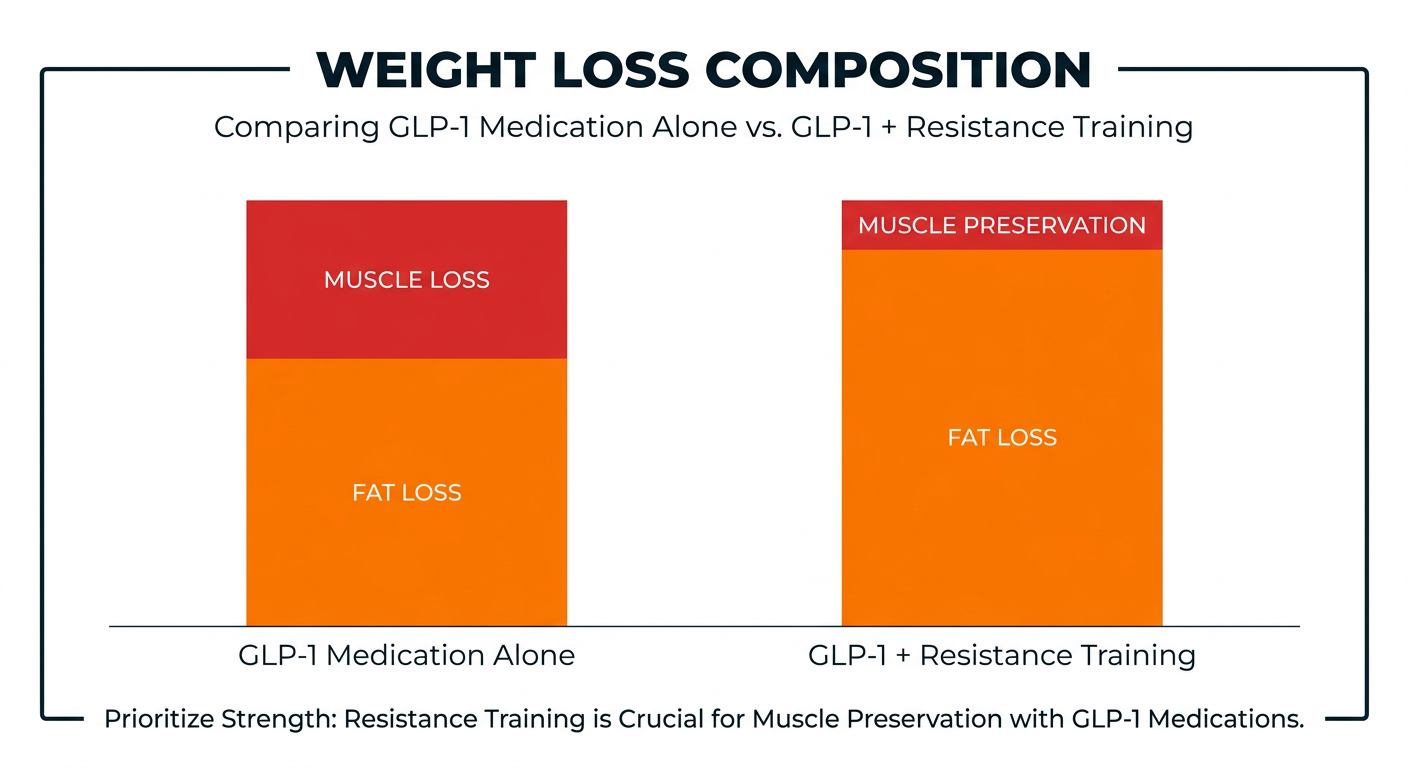
Research indicates that without resistance training, nearly 40% of weight lost on GLP-1s can be lean muscle mass.
This matters especially for adults over 55 because you're already fighting sarcopenia—the natural age-related muscle loss that accelerates after age 50. The American College of Sports Medicine reports that adults lose 3–8% of muscle mass per decade after 30, with the rate increasing significantly after 60. Adding GLP-1-induced muscle loss to sarcopenia creates a compounding problem.
Here's what less muscle actually means for your daily life:
Lower resting metabolic rate—muscle burns more calories than fat even at rest, so losing muscle makes future weight maintenance harder
Reduced bone density—muscle contractions stimulate bone remodeling; less muscle means weaker bones
Increased fall risk—weaker legs and core compromise balance and reaction time
Decreased functional independence—everyday tasks like carrying groceries, climbing stairs, and getting up from chairs become harder
The goal isn't to avoid GLP-1 medications—they're genuinely effective tools for weight management. The goal is to protect your muscle while the medication does its job on fat stores.
How EveryBitFit Designs GLP-1 Muscle Preservation Programs
At our private Scottsdale personal training studio, we've developed specific protocols for clients on GLP-1 medications. This isn't the same program we'd design for someone not on these drugs—the physiological context is different, and the training must adapt.
Our GLP-1 muscle preservation approach centers on three principles:
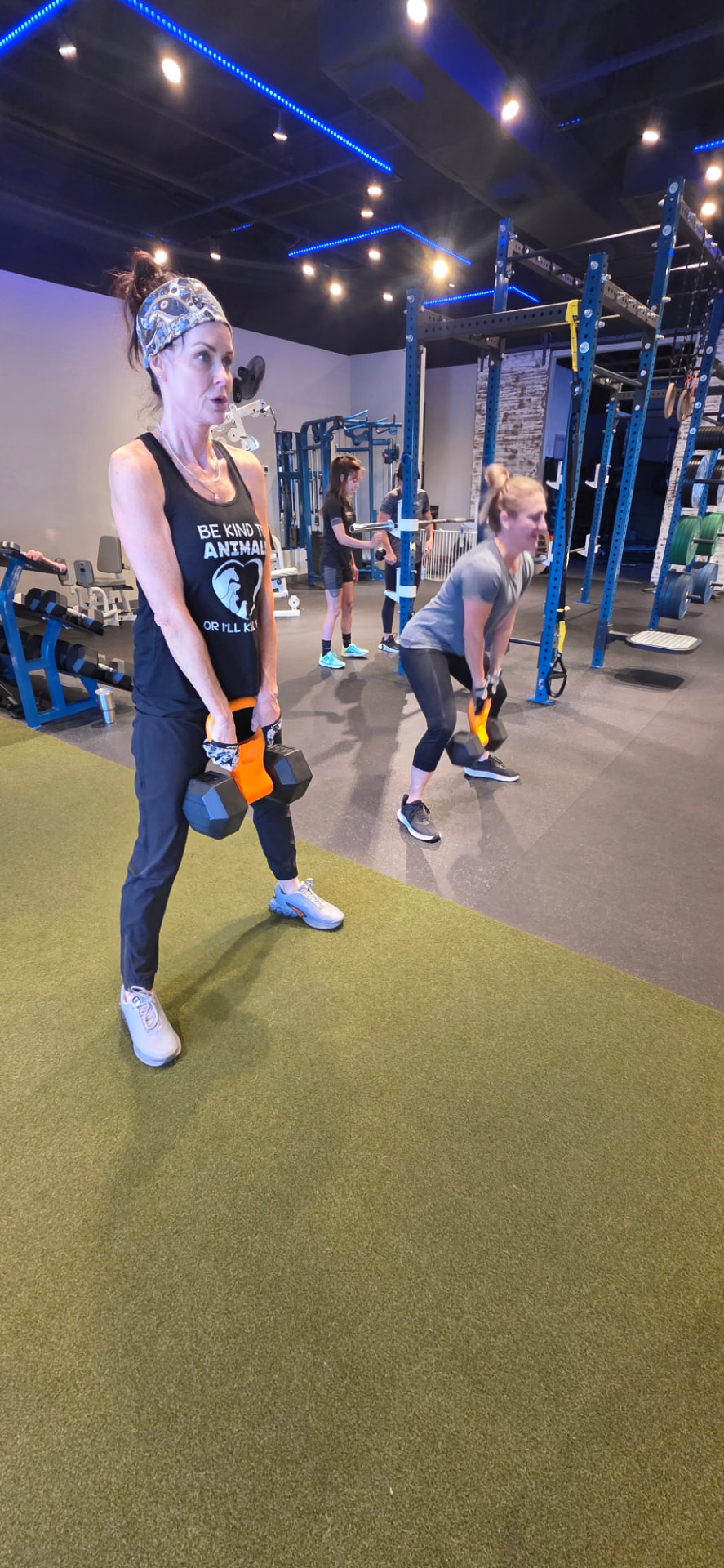
Progressive resistance training with adequate volume. Research from the American College of Sports Medicine shows that muscle preservation during caloric deficit requires sufficient mechanical tension—the kind only resistance training provides. We program 2–3 sessions weekly, focusing on compound movements that work multiple muscle groups: squats, deadlifts, rows, presses, and carries. Each session includes progressive overload, meaning weights or reps increase systematically over time.

Compound movements like squats are essential for maintaining bone density and functional strength during weight loss.
Protein timing coordination with appetite patterns. GLP-1 medications dramatically reduce appetite, which sounds great until you realize you're struggling to consume enough protein. Our nutritional coaching helps clients strategize protein intake around their medication timing—often front-loading protein earlier in the day when appetite is slightly higher, or using higher-protein, lower-volume food choices.
Recovery-focused programming. Clients on GLP-1s often report lower energy and slower recovery. We adjust training intensity and volume accordingly, prioritizing quality over quantity. A perfectly executed set of 8 reps builds more muscle than a sloppy set of 15.
Because we're a private studio since 2013—not a crowded big-box gym—we can monitor every rep, adjust on the fly, and ensure you're training hard enough to preserve muscle without overdoing it during a period of reduced caloric intake.
Taking Ozempic, Wegovy, Mounjaro, or Zepbound? Don't lose your strength while losing weight. Book a Free Fitness Strategy Session + Workout to learn exactly how we'd design a muscle-preservation program for your situation. Call (602) 743-6867 or schedule online.
Practical GLP-1 Muscle Preservation Strategies You Can Start Today
Whether you work with a trainer or exercise independently, these evidence-based strategies will help protect your lean mass during GLP-1 therapy.
1. Prioritize protein at every meal—aim for 0.7–1.0 grams per pound of body weight daily.
This is higher than the standard RDA because you're in a caloric deficit. A 160-pound person should target 110–160 grams of protein daily. Spread intake across 3–4 meals rather than trying to consume it all at once—your body can only utilize roughly 30–40 grams per meal for muscle protein synthesis. Good sources include chicken, fish, Greek yogurt, eggs, cottage cheese, and whey protein supplements if needed.
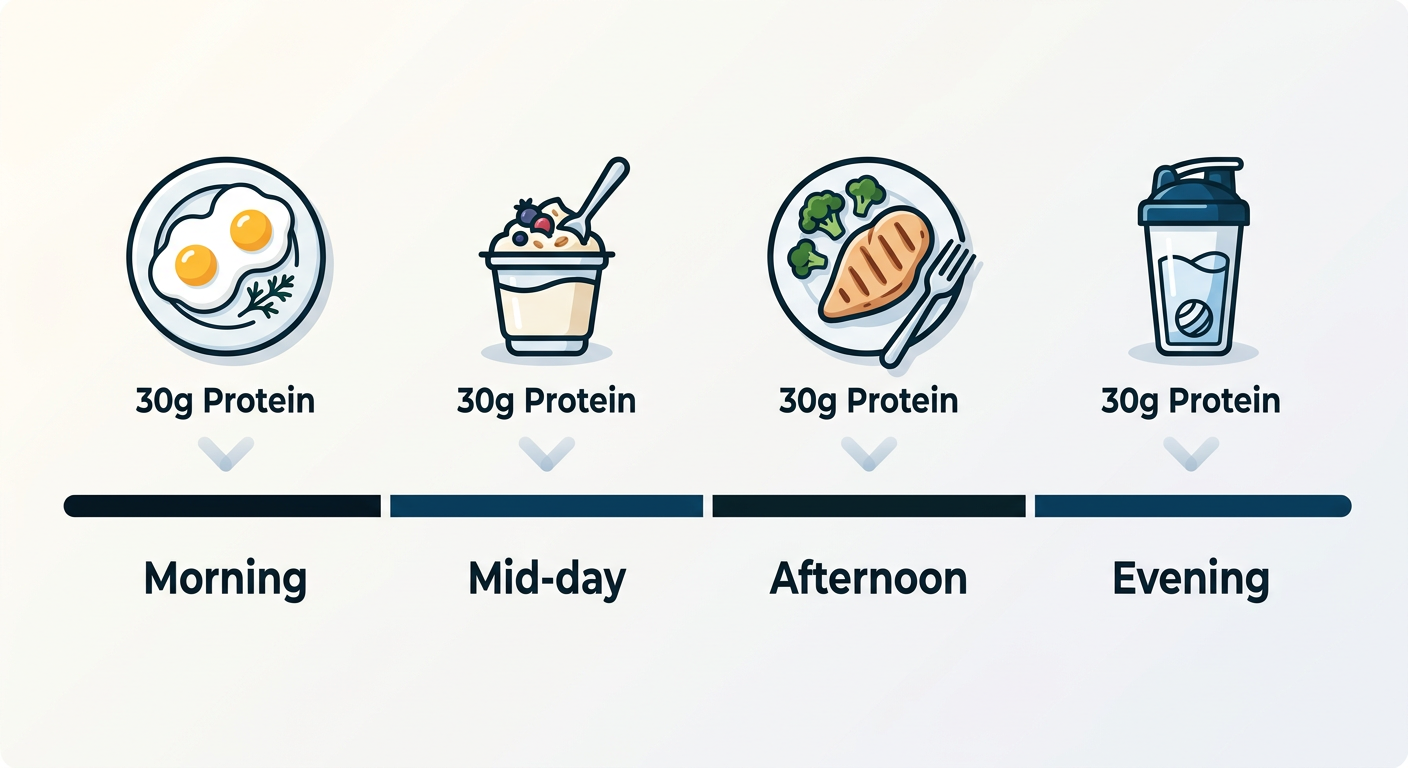
Distributing protein intake throughout the day maximizes muscle preservation signals.
2. Lift weights at least twice weekly, focusing on compound movements.
Compound exercises—movements using multiple joints and muscle groups—deliver the biggest muscle-preservation signal. Each session should include at least one lower-body push (squat or leg press), one lower-body pull (deadlift or Romanian deadlift), one upper-body push (bench press or overhead press), and one upper-body pull (row or lat pulldown). This is exactly the framework our strength training classes in Scottsdale follow.
3. Train with adequate intensity—not just going through the motions.
Muscle preservation requires mechanical tension. That means lifting weights heavy enough that the last 2–3 reps of each set feel genuinely challenging. If you can easily complete 15 reps, the weight is too light to send a strong muscle-preservation signal. Aim for 6–12 rep ranges with weights that make the final reps difficult but doable with good form.
4. Time protein around your workouts.
Consuming 20–40 grams of protein within 2 hours of resistance training supports muscle protein synthesis. This doesn't require expensive supplements—a chicken breast, a cup of Greek yogurt, or a protein shake all work. The key is consistency.
5. Don't slash calories too aggressively.
GLP-1 medications already create a significant caloric deficit through appetite suppression. Intentionally restricting calories further increases muscle loss risk. Eat when you're hungry, prioritize protein and nutrient-dense foods, and don't force additional restriction on top of what the medication provides.
How Much Cardio Should You Do on GLP-1 Medications?
Cardio has cardiovascular benefits, but excessive cardio during a caloric deficit accelerates muscle loss. The body needs energy, and if you're burning large amounts through aerobic exercise while eating less, muscle becomes a fuel source.
For GLP-1 users focused on muscle preservation, we recommend limiting steady-state cardio to 2–3 sessions of 20–30 minutes weekly. Walking is excellent—it burns calories, improves insulin sensitivity, and doesn't create significant muscle breakdown. High-intensity cardio sessions should be brief (15–20 minutes) and limited to once or twice weekly.
Prioritize resistance training over cardio. If you only have three hours weekly for exercise, spend two hours lifting weights and one hour walking—not the reverse. Our Burn Class combines both modalities efficiently for clients with limited time.
Can You Actually Build Muscle While on GLP-1 Medications?
Building significant new muscle during a caloric deficit is extremely difficult—your body lacks the energy surplus typically required for muscle growth. However, muscle preservation is absolutely achievable, and beginners or those returning to exercise after a long break may experience modest muscle gains even while losing weight (a phenomenon called body recomposition).
The key distinction: don't expect to get significantly stronger or more muscular while on GLP-1 therapy. The realistic goal is maintaining your current lean mass while the medication helps you lose fat. Once you've reached your weight goal and can eat at maintenance calories, that's when progressive muscle building becomes more feasible.
Our senior personal training programs set realistic expectations from day one. We track body composition—not just scale weight—so you can see fat loss and muscle retention happening simultaneously.
What Happens If You Don't Strength Train While on GLP-1 Medications?
Without resistance training, research suggests 30–40% of weight lost on GLP-1 medications comes from lean mass. For someone losing 40 pounds, that could mean 12–16 pounds of muscle gone.
The consequences compound over time:
Your metabolism slows, making weight regain easier if you stop the medication
Bone density decreases alongside muscle mass, increasing fracture risk
Physical function declines—tasks like climbing stairs or carrying groceries become harder despite weighing less
The aesthetic result may disappoint—less muscle definition, sagging skin, the "skinny fat" appearance
The good news: structured resistance training dramatically improves outcomes. A study in Obesity found that combining resistance training with dietary intervention preserved significantly more lean mass than diet alone during weight loss. The exercise didn't need to be extreme—consistency and progressive overload mattered most.
How Long Does It Take to See Results From GLP-1 Muscle Preservation Training?
Body composition changes become measurable within 8–12 weeks of consistent resistance training. You won't necessarily see dramatic scale changes—muscle is denser than fat, so you might lose inches while the scale moves slowly. This is actually a sign the program is working.
More immediate benefits include increased energy, better sleep, improved mood, and enhanced daily function. Clients at our small group training sessions often report feeling stronger within 3–4 weeks, even before visible changes appear.
Patience matters here. GLP-1 therapy is typically a 12–24 month journey. Muscle preservation is a long game, not a quick fix.
Is personal training necessary for GLP-1 muscle preservation?
Personal training isn't strictly necessary, but it significantly improves outcomes for GLP-1 users. The medication creates unique challenges—reduced appetite affecting protein intake, lower energy impacting workout intensity, and the need for precise progressive overload to preserve muscle during caloric deficit. A qualified Scottsdale trainer monitors these variables and adjusts programming weekly, something most people struggle to do independently.
How does strength training on Ozempic differ from regular strength training?
Strength training on Ozempic or similar GLP-1 medications requires modified intensity and recovery protocols. Because you're in a caloric deficit with potentially reduced energy, training volume may be lower than typical hypertrophy programs. The focus shifts from muscle building to muscle preservation—maintaining current strength rather than pushing for personal records. Protein timing becomes more strategic due to appetite suppression.
What's the best protein intake for someone on Wegovy or Mounjaro?
Research supports 0.7–1.0 grams of protein per pound of body weight daily for muscle preservation during GLP-1 therapy. For a 150-pound person, that's 105–150 grams daily spread across multiple meals. Prioritize complete protein sources containing all essential amino acids: meat, fish, eggs, dairy, or strategic combinations of plant proteins. Our nutrition resources include high-protein meal ideas for appetite-challenged clients.
Your Next Step: Protect Your Muscle While Losing Weight
GLP-1 medications work. But without strategic strength training and adequate protein, you risk losing the muscle that keeps you strong, mobile, and metabolically healthy. The evidence is clear: resistance training 2–3 times weekly, combined with protein-focused nutrition, preserves lean mass during weight loss.
At EveryBitFit, we've built GLP-1-specific training protocols for Scottsdale adults who want to maximize their medication's benefits without sacrificing strength. Our private studio means personalized attention, programming adjusted to your energy levels and appetite patterns, and trainers who understand the unique physiology of weight loss drug therapy.
Ready to preserve your strength? Book a Free Fitness Strategy Session + Workout or call (602) 743-6867. Your first session is free—come see what muscle-preserving training actually looks like.